Small Shelf Styling Ideas for Apartments and Tiny Spaces
Small shelf styling ideas are ways to arrange books, plants, art, and storage boxes on a shelf so it looks deliberate and still holds what you actually use. This article covers 16 of them for apartments and tiny spaces, ordered from the simplest to the ones that take a bit of planning. Most cost between $10 and $50 in extras, and most take under an hour.
The main problem in a small space is that a shelf has two jobs. It has to hold real things, like chargers, books, and keys, and it has to look good. Most styling advice assumes a big living room with a wide bookcase. In an apartment you might have one narrow shelf, a few floating boards, or a ledge above the sofa, and every item on it competes for room.
You don’t need to use every idea here. Pick the two or three that fit your shelves and your habits, and skip the rest.
Jump To
- What to Check Before You Style
- The Ideas, Simplest First
- How to Start
- What Goes Wrong When You Skip a Step
- Frequently Asked Questions
- Final Thoughts
What to Check Before You Style
Measure first. Shelf depth decides what fits. Many floating shelves are around 8 to 10 inches deep, standard bookcases are often 10 to 12 inches, and picture ledges are shallow, often around 4 to 5 inches. A deep object on a shallow shelf looks like it’s about to fall. Check the listing or measure your own shelf with a tape.
Weight comes second. Every shelf has a load limit, and it depends on the shelf, the wall, and how it’s fixed. In many homes, studs sit about 16 inches apart on center, and sometimes 24 inches, and fixing a bracket into a stud holds far more than a plastic anchor in drywall alone. If you rent or can’t drill, use adhesive products and follow the weight limit printed on the package, with a margin.
Light is third. A shelf in a dark corner needs lighter colors and a source of light, and a shelf in direct sun fades fabric, paper, and some plastics. Think about where the light falls before you buy anything for it.
Last is what you use daily. Remove anything you don’t use, and decide what must stay within reach. Styling is the second step, after editing.
Quick Reference
- Best starting point: Clear the shelf and put back only what you use
- Biggest impact: Grouping items in threes and leaving gaps
- Budget to start: Roughly $10 to $50 for baskets, a plant, and a few frames (approximate, prices vary)
- Time: 30 to 60 minutes per shelf
The Ideas, Simplest First
Clear the Shelf and Edit Before You Style
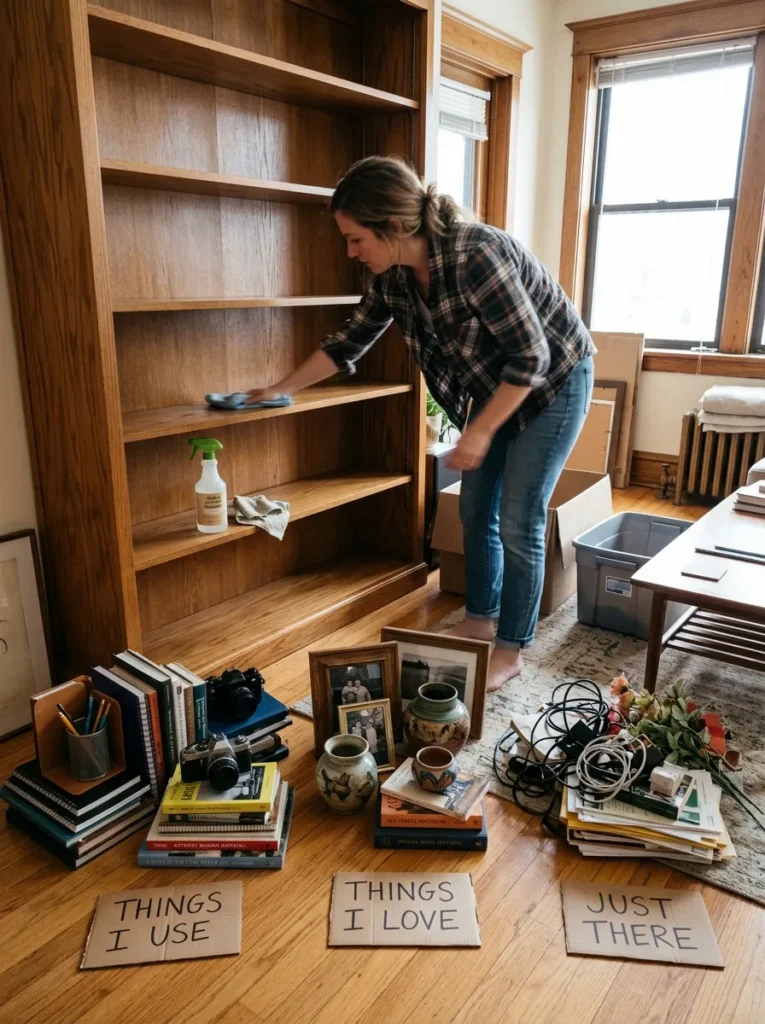
This is the least exciting idea and the one that matters most. Take everything off the shelf, wipe it down, and sort the items into three piles: things you use, things you love, and things that are just there. Put back the first two groups and leave the third out.
Edit note: Look at each item and ask if you used it in the past month. Mail, loose cables, and old receipts pile up on small shelves faster than anywhere else. A shelf that holds only ten things looks better than one that holds thirty, and it’s easier to dust.
Basket tip: If you have things you need but don’t want to see, put them in one lidded box or basket. Keep the box on the lowest shelf or at the end, and label it. It suits renters, small studios, and anyone who wants a quick reset on a Sunday.
Shop This Look
Small Shelf Styling Ideas Built on Groups of Three
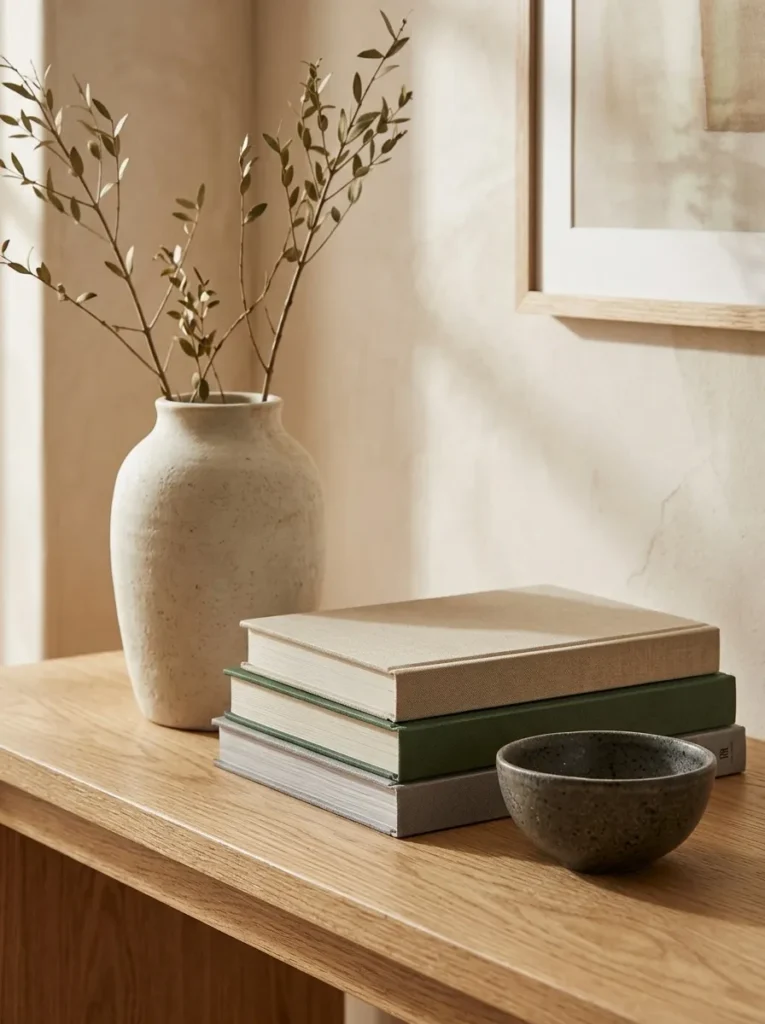
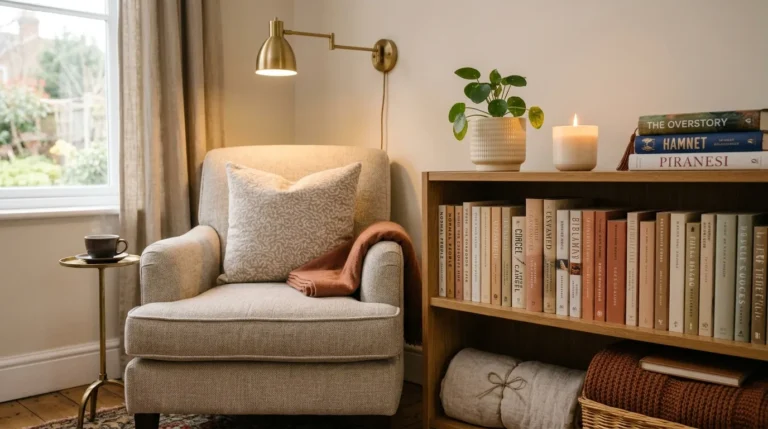
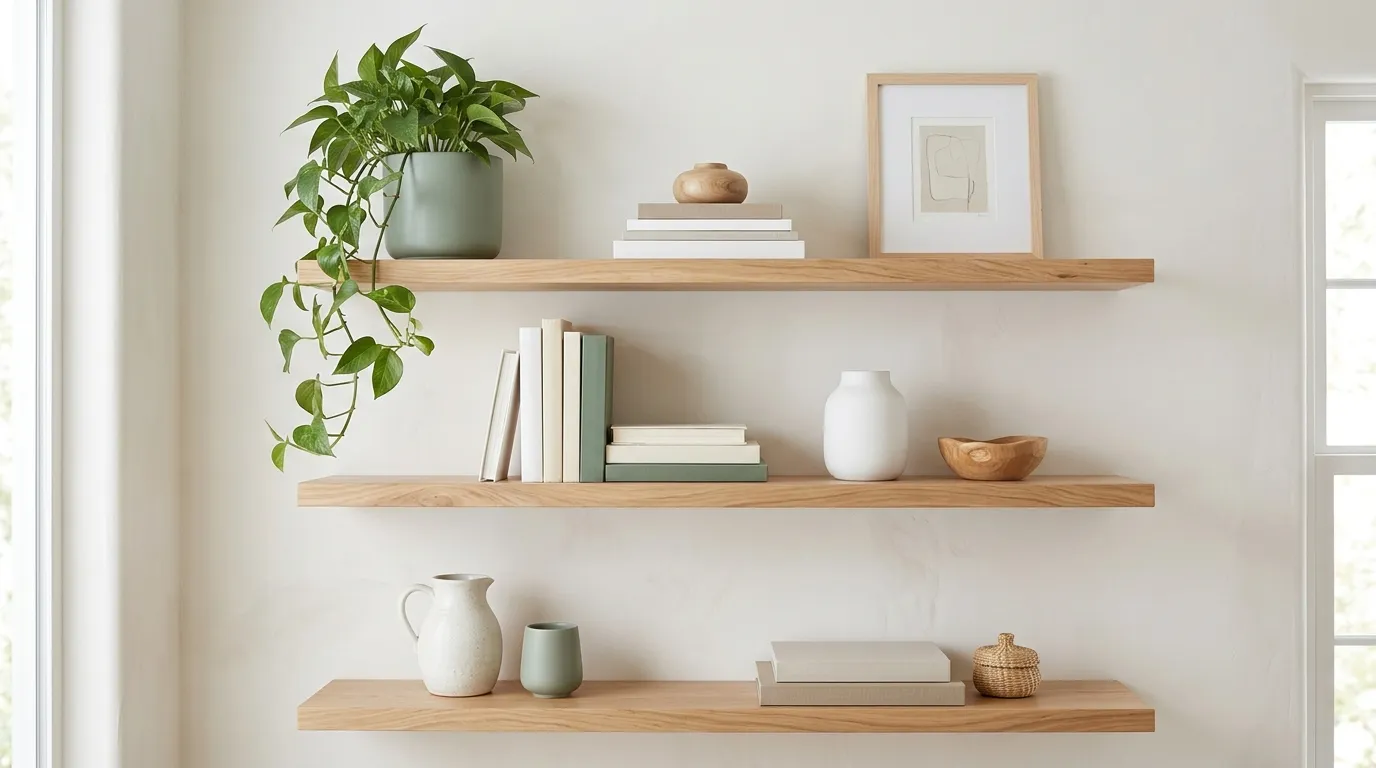
A group of three objects looks natural, and a pair can look stiff or like an accident. Pick one tall item, one medium item, and one short item, and place them close together, with the tallest not in the center. A vase, a stack of books, and a small bowl is a standard combination.
Spacing note: Keep the objects about an inch or two apart, or touching, so they read as one group. On a shelf that’s 24 inches wide, one or two groups is usually plenty. If you add a fourth item to a group, it starts to look crowded.
Height tip: Vary the heights so the group forms a rough triangle, and don’t use items of the same size. If everything is the same height, put one on a small book stack to raise it. It suits narrow shelves and floating boards where you only have room for one or two groups.
Shop This Look
Stack Books Both Ways
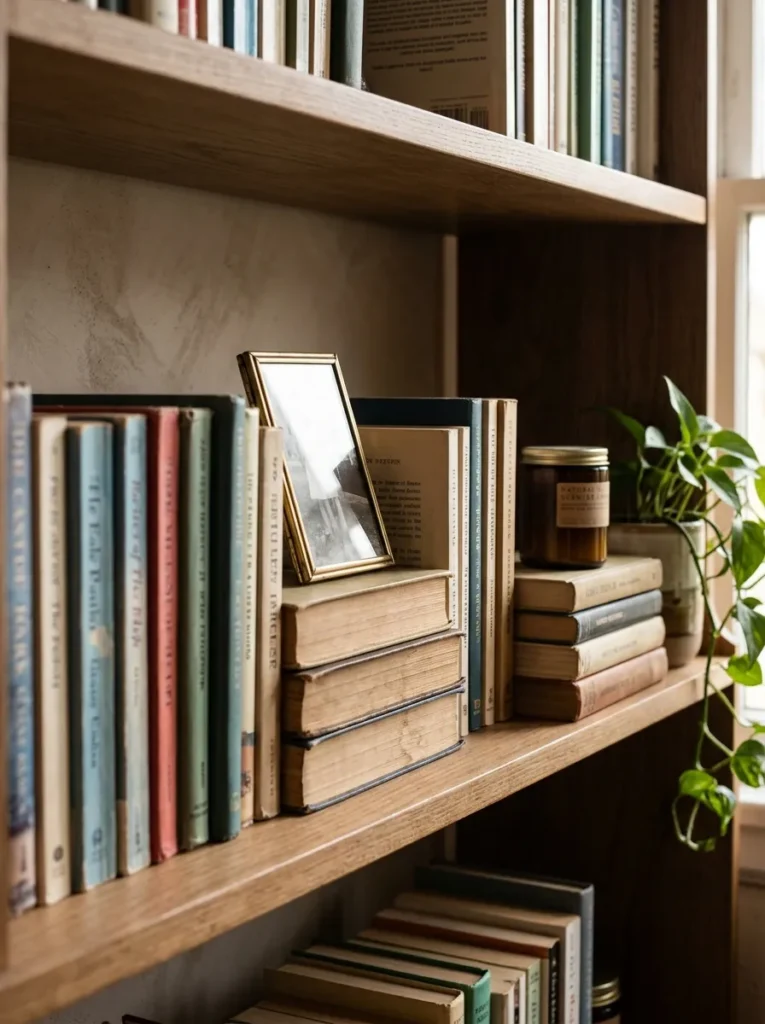
Books are the cheapest shelf decor, and you probably already own them. Stack some horizontally and stand others upright. A short horizontal stack can hold up a small object on top, such as a candle or a framed photo, and an upright row breaks it up.
Stack note: Keep stacks to about three to five books, and put the largest on the bottom. Turn the spines outward, or turn them around so the pages face out for a calmer, neutral look. Check that the stack is stable, since a tall stack on a narrow shelf can tip.
Weight tip: Books are heavy, and a shelf full of hardcovers can get close to its limit faster than you’d think. Check the load rating of your shelf and spread books across more than one shelf. It suits readers and anyone who wants storage that doubles as decor.
Shop This Look
One Trailing Plant to Soften the Edge
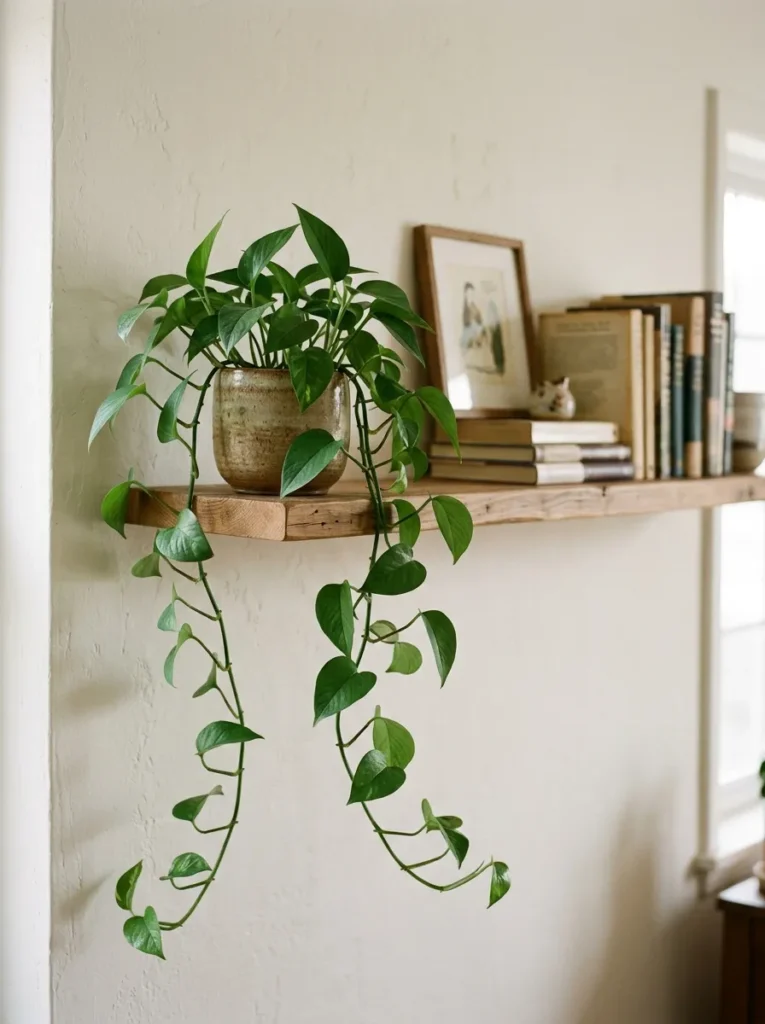
A trailing plant, like pothos or a string plant, adds green and breaks up straight lines. Put it in a small pot at the end of a shelf and let the vines hang over the edge. It’s an easy way to add life to a plain shelf.
Care note: Pothos tolerates low light better than many houseplants, but shelves far from windows still need a bit of brightness. Water it when the top inch of soil is dry, and use a pot with a drainage hole and a saucer, since water damages shelf surfaces. If you travel a lot, a faux plant avoids the problem.
Placement tip: Put the plant on an upper shelf so the vines hang down, and keep it away from heating vents. Check the pot’s weight, because wet soil adds up. It suits small apartments with limited floor space and bright windows nearby.
Shop This Look
Leave a Third of the Shelf Empty
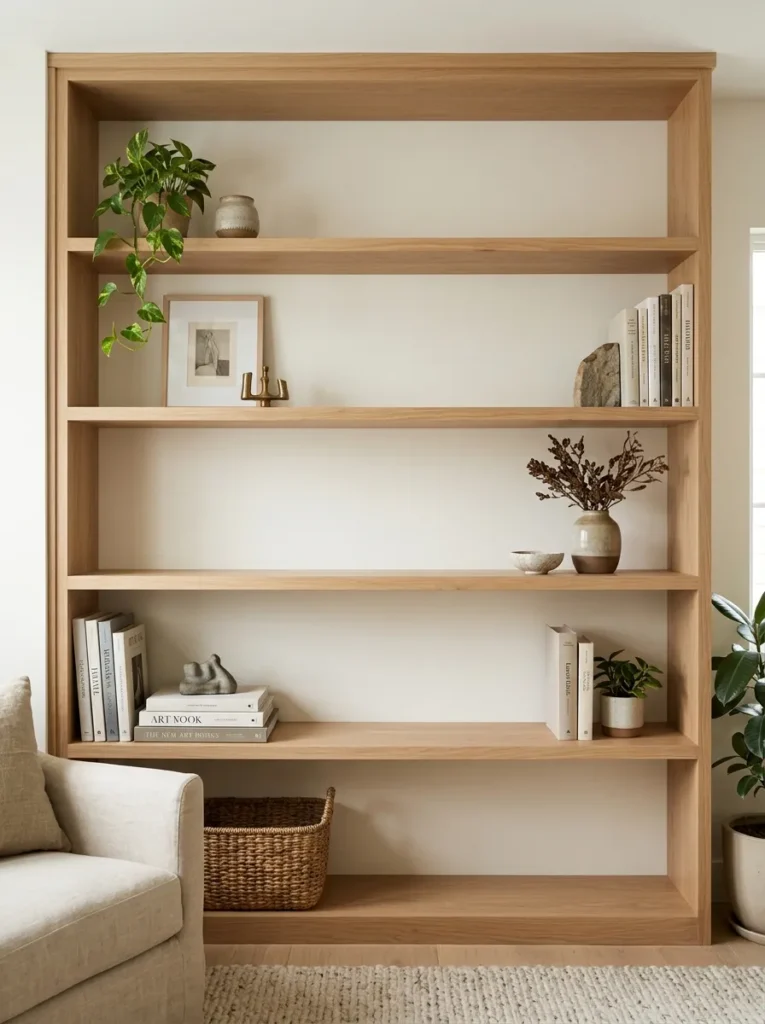
Empty space is part of the design. A shelf with room around each group looks calmer and makes the objects look more important. A common guideline is to leave roughly a third of the shelf open, though you can adjust it to your taste.
Gap note: Set your groups in place, then step back and look from across the room. If it looks crowded, remove one item. Keep a few inches of space on each side of a group so the eye can rest.
Rotation tip: Empty space also gives you room to swap things in and out, so you can change the look without buying more. Keep a few extra decorative items in a drawer to rotate. It suits small spaces where a full shelf would feel heavy.
Shop This Look
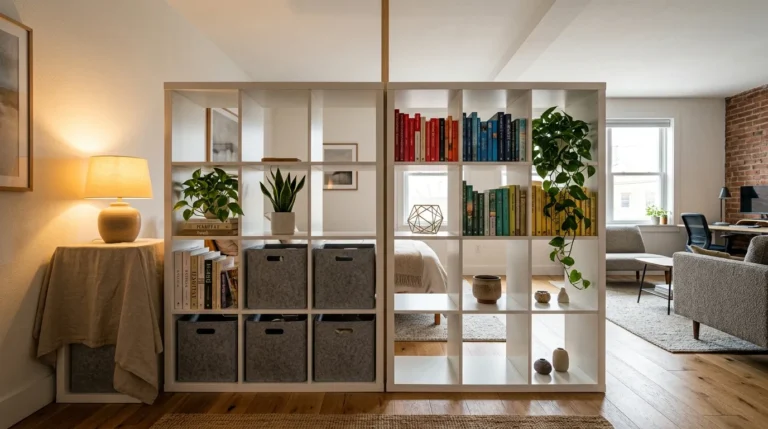
Baskets and Boxes to Hide Everyday Clutter
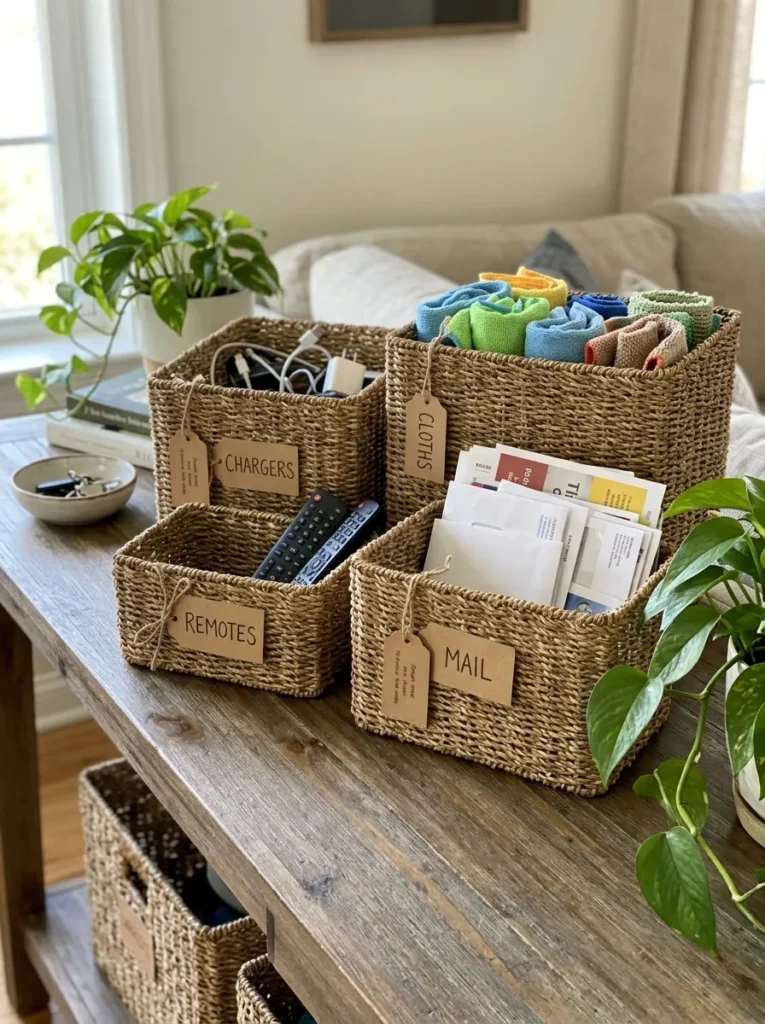
A basket hides the things you need but don’t want to look at, such as chargers, remotes, mail, and cleaning cloths. Match the baskets in material and color so they look like a set, and put the most-used ones at the front.
Fit note: Measure the inside height and depth of the shelf and buy baskets that are an inch or so smaller. A basket that’s too tight is hard to remove, and one that’s too small leaves odd gaps. Test one before you buy several.
Label tip: A small tag or a label on the front tells you what’s in each basket. Use a soft-sided basket on a lower shelf, where it’s easier to pull out. It suits studios, entryways, and bedrooms where storage has to be hidden.
Shop This Look
Small Shelf Styling Ideas Using a Picture Ledge
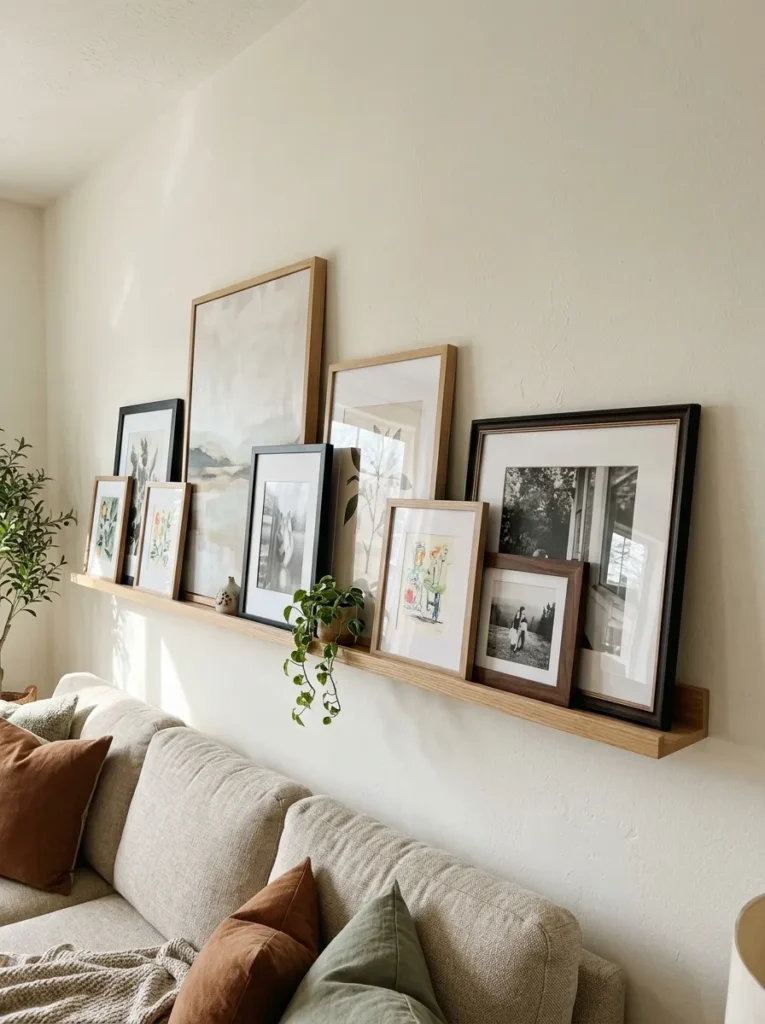
A picture ledge is a shallow shelf, often around 4 to 5 inches deep, made to hold framed art. You can lean frames against the wall and overlap them, so you can change the arrangement without making new holes. It’s a good fit for renters and for people who change their minds.
Layer note: Lean the largest frame at the back and put smaller ones in front, overlapping slightly. Mix in a small object or a candle to break up the frames. Keep the frames in one or two colors so it doesn’t look busy.
Grip tip: Some ledges have a lip that stops frames from sliding. Check that the lip is high enough for the frame’s weight and that the shelf is level. Use a bit of museum putty under each frame if you’re worried about knocks. It suits narrow walls and spaces above a sofa or a desk.
Shop This Look
Mix Heights With Risers and Stands
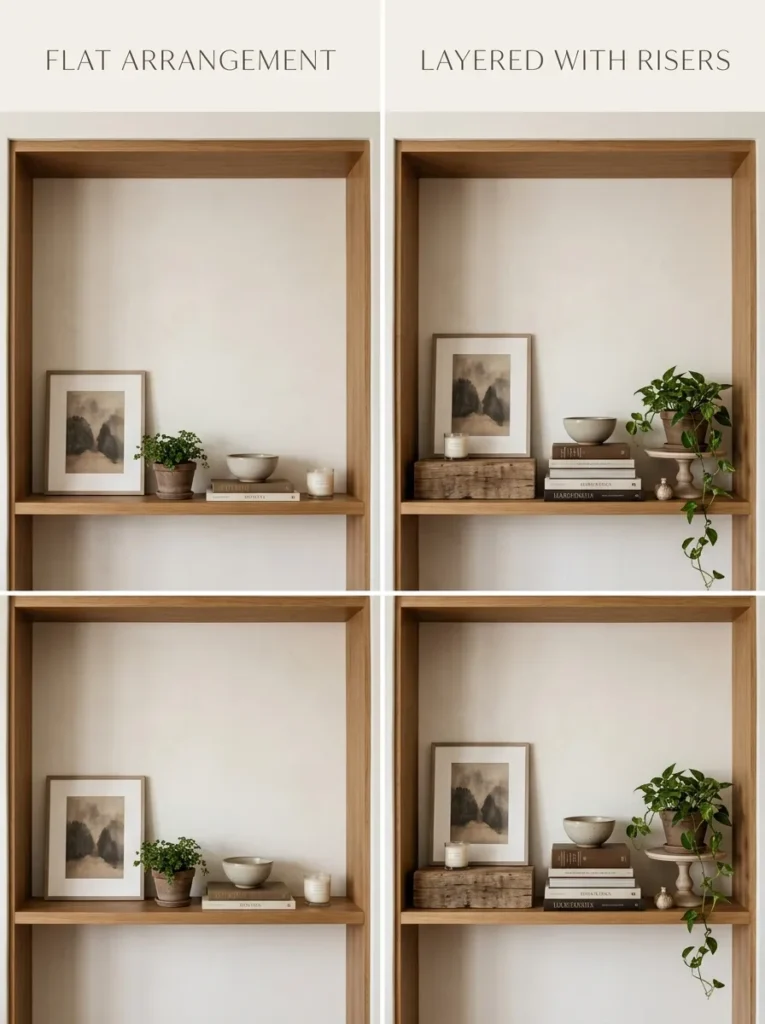
A shelf where everything is the same height looks flat. Small risers, such as a block of wood or a cake stand, lift one item and make the group look layered. It also lets you use more of the vertical space on a deep shelf.
Riser note: Use something about 2 to 4 inches high, and keep it plain so the object on top is the focus. A stack of books works as a riser too. Make sure the riser is stable and the object doesn’t hang over the edge.
Color tip: Choose a riser in the same tone as the shelf or a neutral color. A contrasting riser draws the eye to itself. It suits small shelves where you want a few items to stand out.
Shop This Look
Limit the Shelf to Three Colors
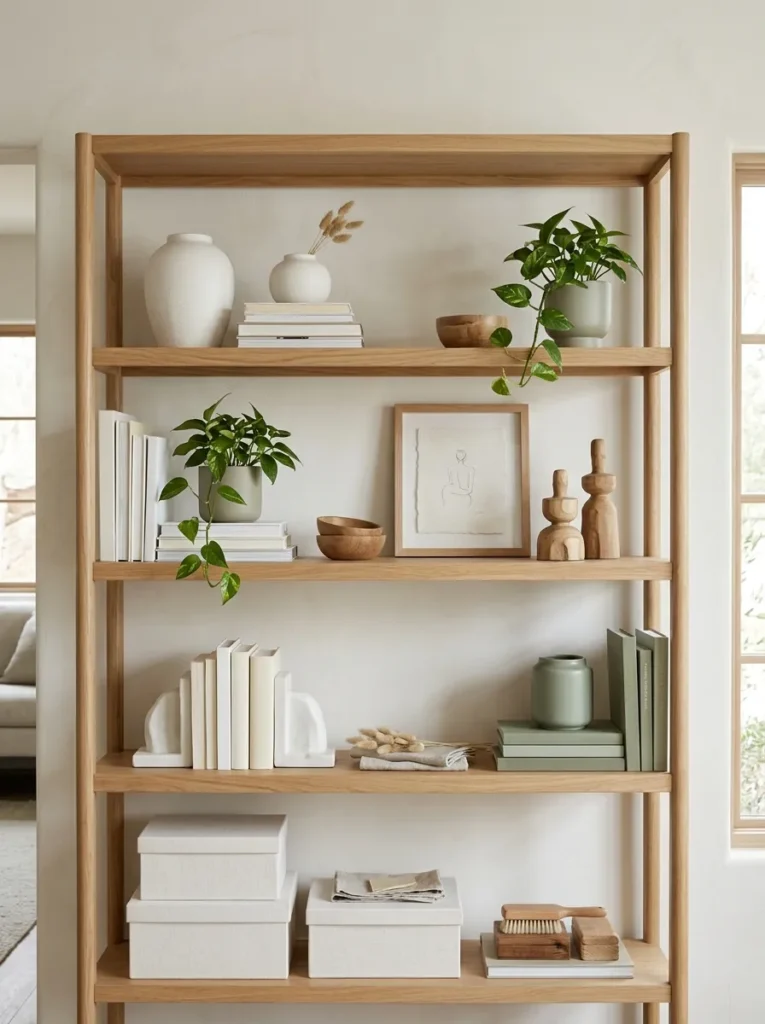
A shelf with too many colors looks busy. Pick a main color, a second color, and an accent. For example, white, natural wood, and one muted green. Use them across the objects, and keep the rest neutral.
Palette note: Look at the room first. The shelf should work with the wall color, the furniture, and the textiles nearby. If the wall is white, you have more freedom, and a colored wall limits your choices.
Mix tip: If you own objects in many colors, put them in a basket or a drawer for later. You can also change their look with a coat of spray paint in one color, if the material allows it. It suits small rooms where a busy shelf adds to the clutter.
Shop This Look
A Small Mirror to Bounce Light
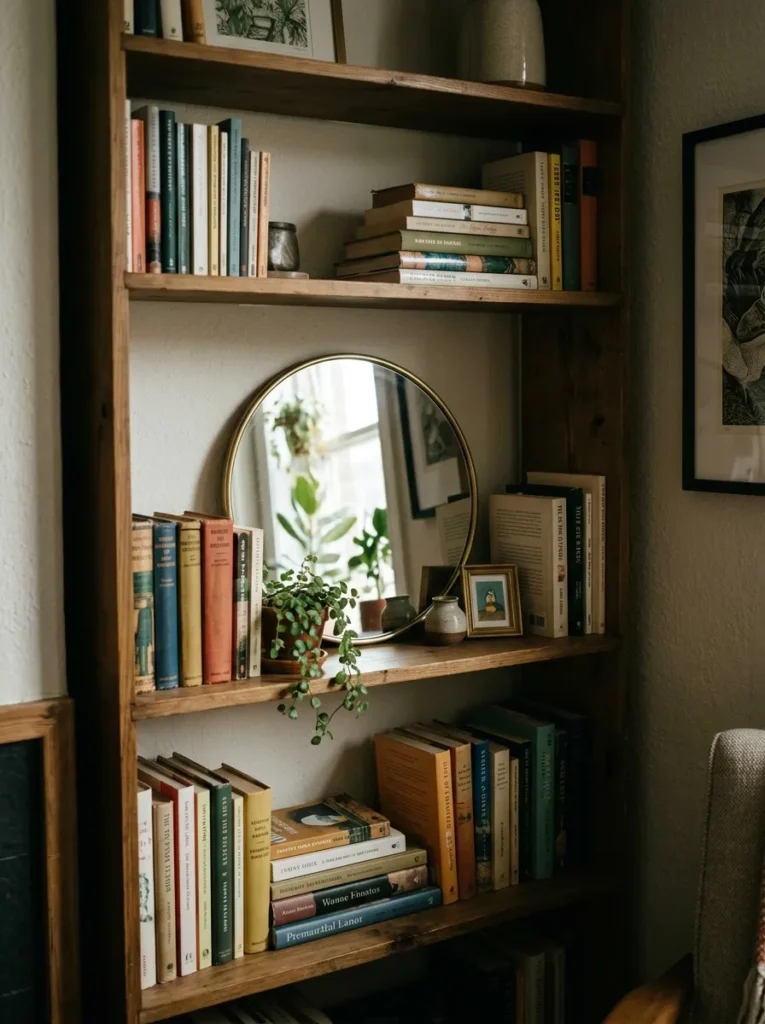
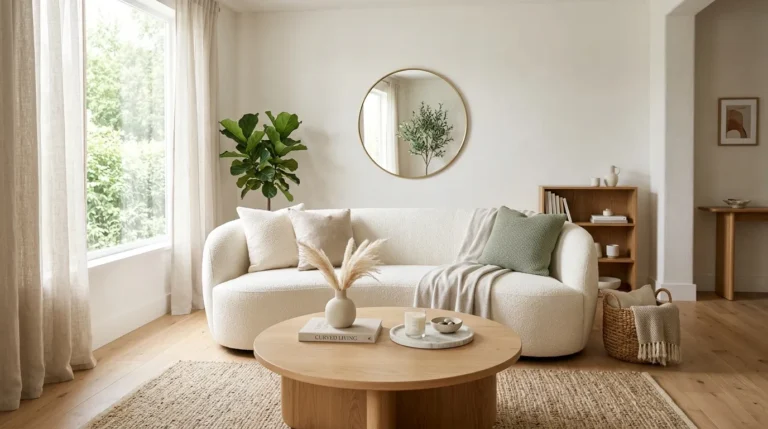
A small mirror on or beside a shelf reflects light and makes a dark corner feel larger. Lean it at the back of a shelf, or hang it above, but keep it out of direct view of a messy area. A round mirror softens a shelf full of straight lines.
Safety note: Mirrors are heavy and breakable. Hang them on a fixing rated for the weight, and don’t lean a large mirror on a shelf that isn’t designed for it. Keep it out of reach of children and pets.
Light tip: Place the mirror where it reflects a window or a lamp, not a blank wall. A common gallery height puts the center of artwork about 57 inches from the floor, but on a shelf, set it by eye. It suits dark apartments and narrow hallways.
Shop This Look
Floating Shelves Above a Door or Desk
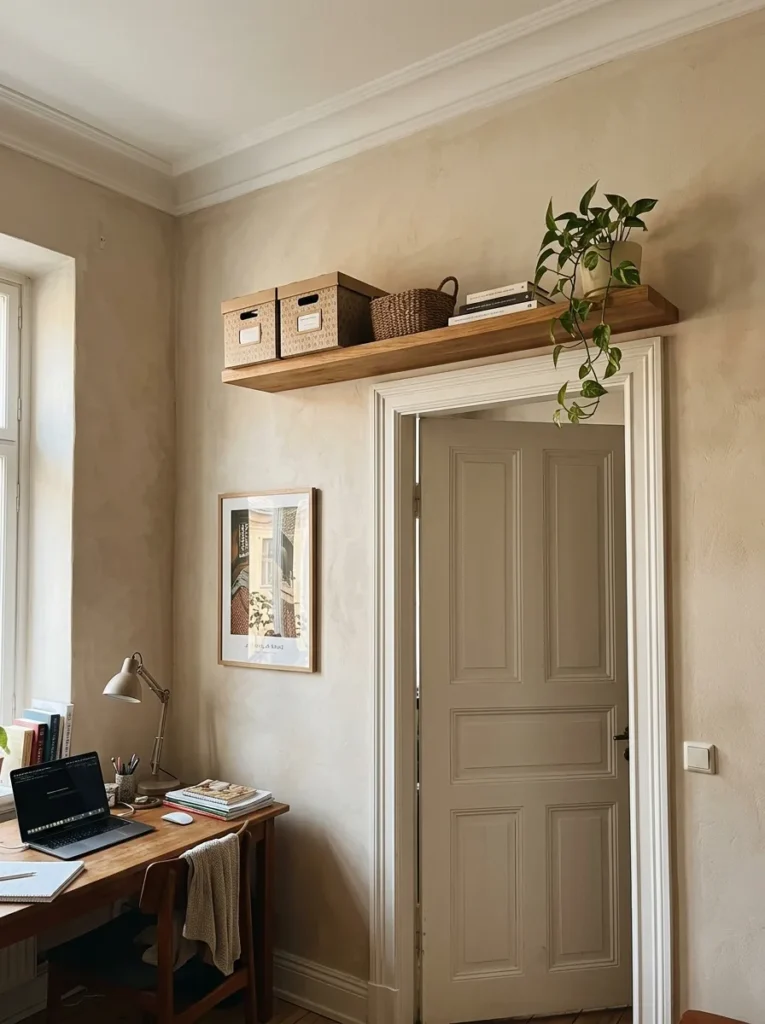
Unused wall space above a door or a desk is a good place for a floating shelf. It adds storage without taking floor space, and it makes the ceiling feel higher. Keep it for light, rarely used items.
Mount note: Use a bracket fixed into studs if you can, and follow the shelf’s load rating. A shelf above a door can catch a head, and one above a desk can drop things on a laptop. Check the clearance before drilling.
Style tip: Keep the objects light, such as small plants, baskets, and frames. Heavy books are better lower down. It suits studios and bedrooms with no spare walls.
Shop This Look
A Narrow Ladder Shelf for Corners
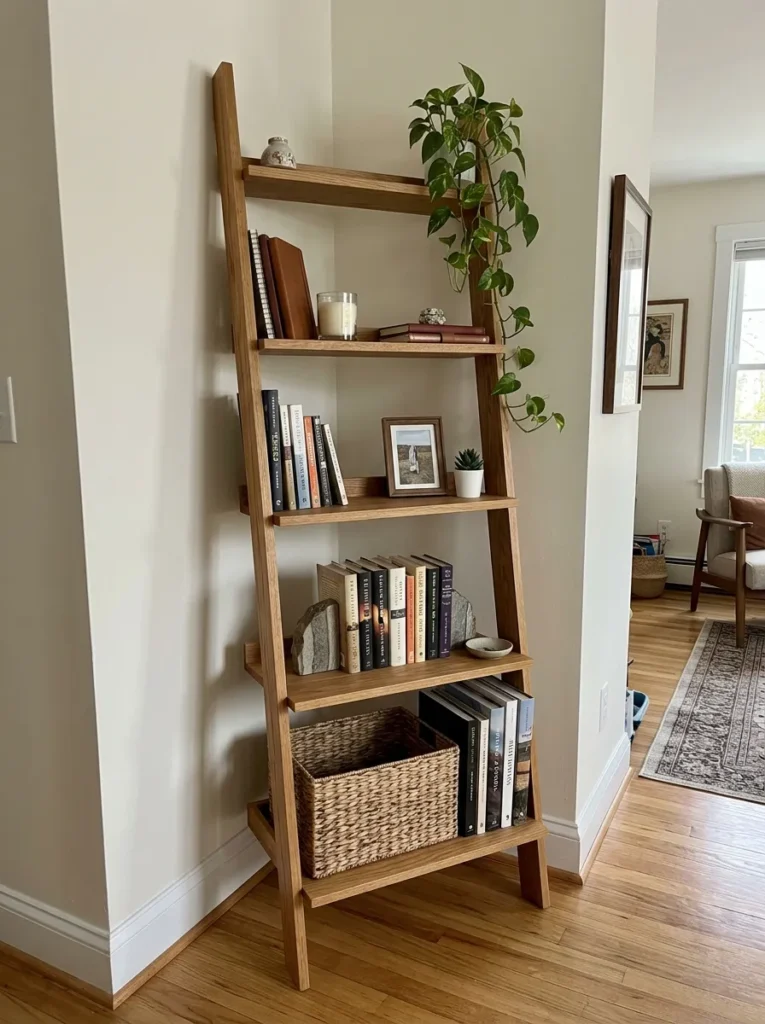
A leaning ladder shelf is a freestanding unit that rests against a wall, with shelves that get narrower toward the top. It uses a corner and takes little floor space. It’s a good option if you can’t drill into walls.
Safety note: Ladder shelves can tip if overloaded at the top or bumped. Put heavier items on the lower shelves, and check whether the unit has an anti-tip fitting. Fix it to the wall if the instructions say so.
Layout tip: Use the wide bottom shelf for baskets and the narrow top shelves for a plant or small art. Keep the top light. It suits renters and corners that look empty.
Shop This Look
Kitchen Shelf Styling With Everyday Items
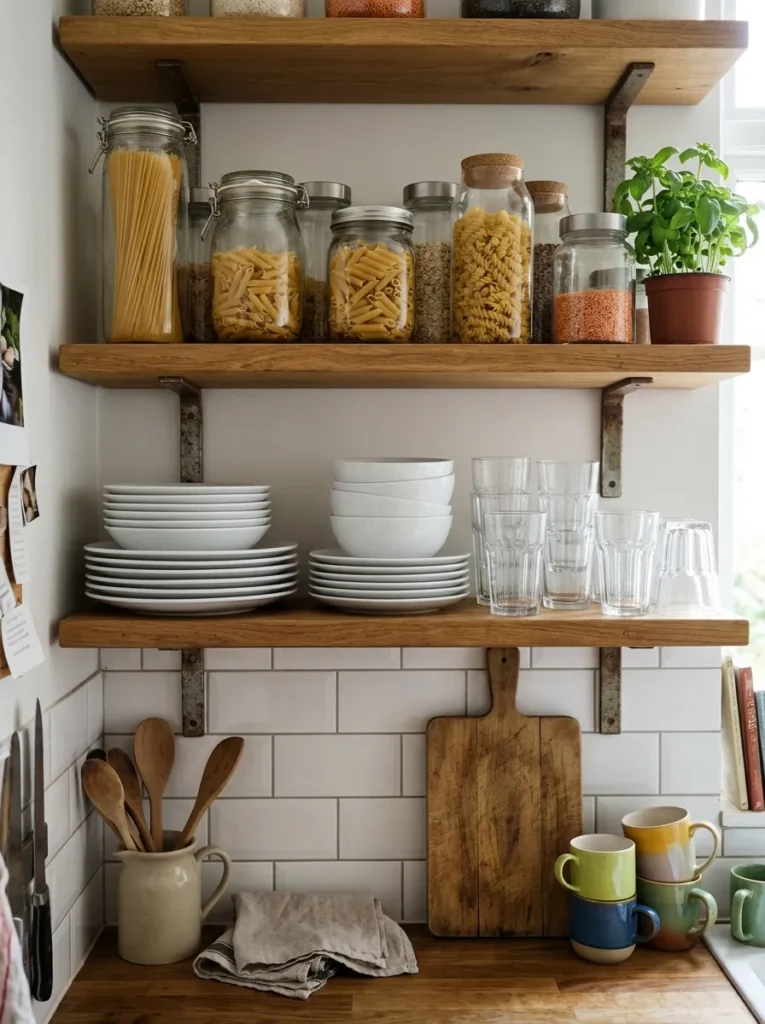
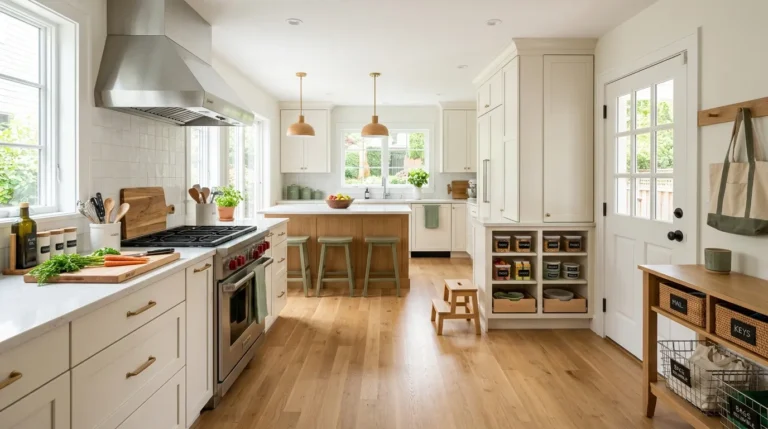
In a small kitchen, shelves hold the things you use, such as plates, glasses, and jars. Style them by stacking and grouping. White plates, matching glasses, and glass jars of pasta look tidy and cost nothing extra.
Grease note: Kitchen shelves collect grease and dust, so keep items you use daily and wipe them regularly. Avoid delicate decor near the stove. Choose washable items.
Group tip: Put like items together, such as bowls with bowls and mugs with mugs. Leave a gap between groups. It suits small kitchens without upper cabinets.
Shop This Look
Bathroom Shelf Styling That Handles Moisture
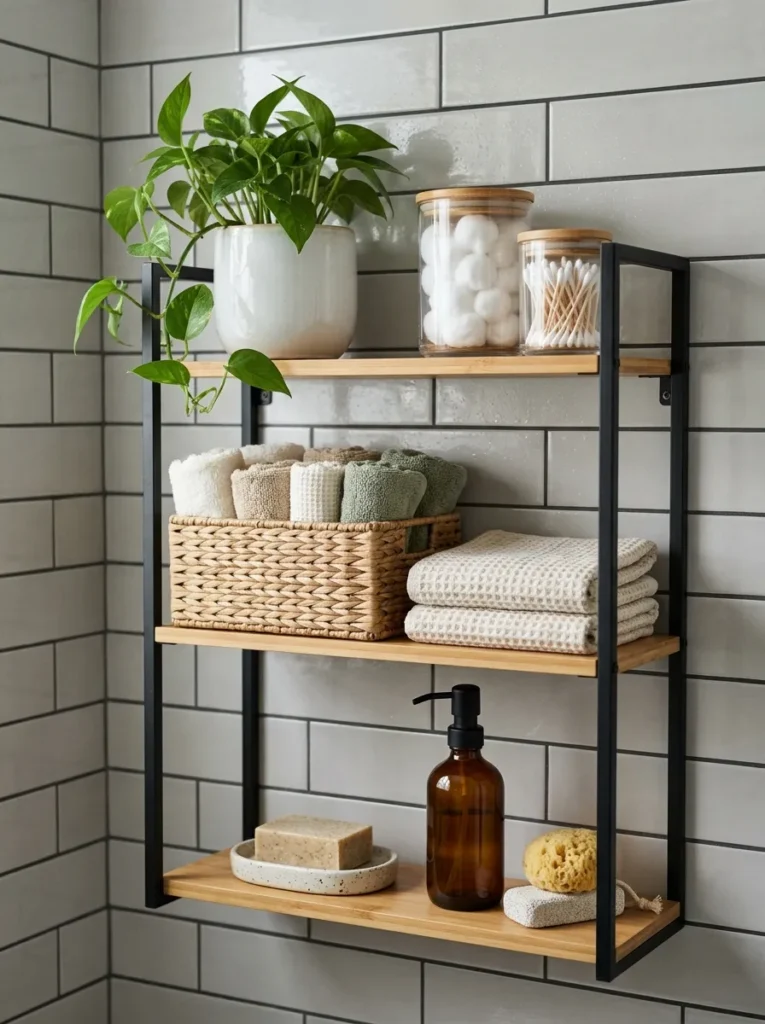
A bathroom shelf holds towels, soap, and a few small objects. Rolled towels in a basket, a glass jar with cotton balls, and a small plant look neat. Moisture is the main problem, so choose materials that tolerate it.
Material note: Metal, glass, and ceramic hold up better than paper or untreated wood. Unsealed wood can warp or grow mold in damp rooms, so seal it or avoid it. Use a bathroom fan or open a window after showers.
Plant tip: Some plants like humidity, but a bathroom with no window may be too dark. Use a faux plant if so. It suits small bathrooms with a shelf above the toilet or beside the sink.
Shop This Look
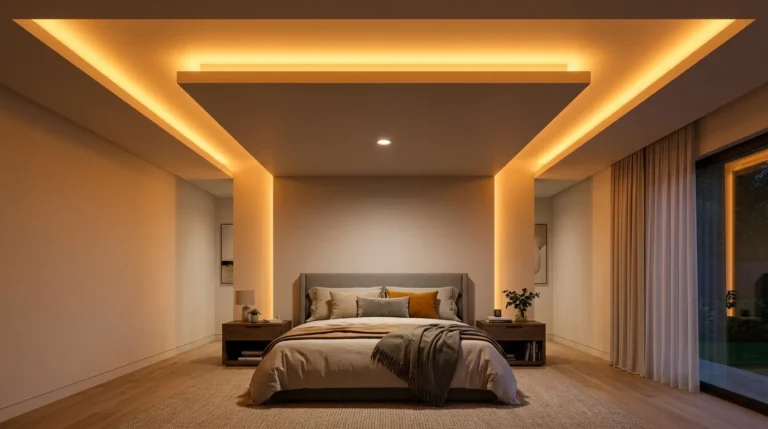
Warm Lighting for a Shelf at Night
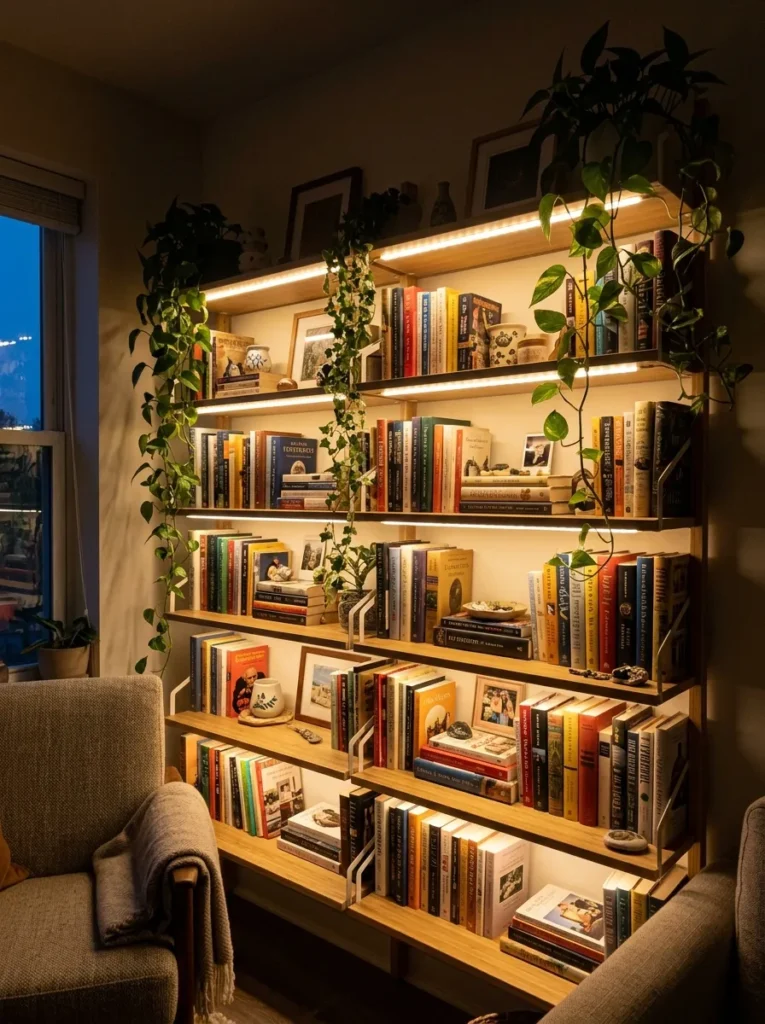
A strip of LED lights or a small clip light makes a shelf glow in the evening. It adds depth and makes a small space feel cozy. Warm white light looks best on most decor.
Placement note: Stick an LED strip under the shelf edge so the light shines down and the bulbs stay hidden. Use a plug-in strip with a switch, or a rechargeable one. Clean the surface first so the adhesive holds.
Heat tip: LED strips stay cool, but check the rating, and don’t cover them with fabric. Keep the cord tidy with small clips. It suits shelves in living rooms and bedrooms where you want a soft glow.
Shop This Look
Rotate Items Seasonally to Keep It Fresh
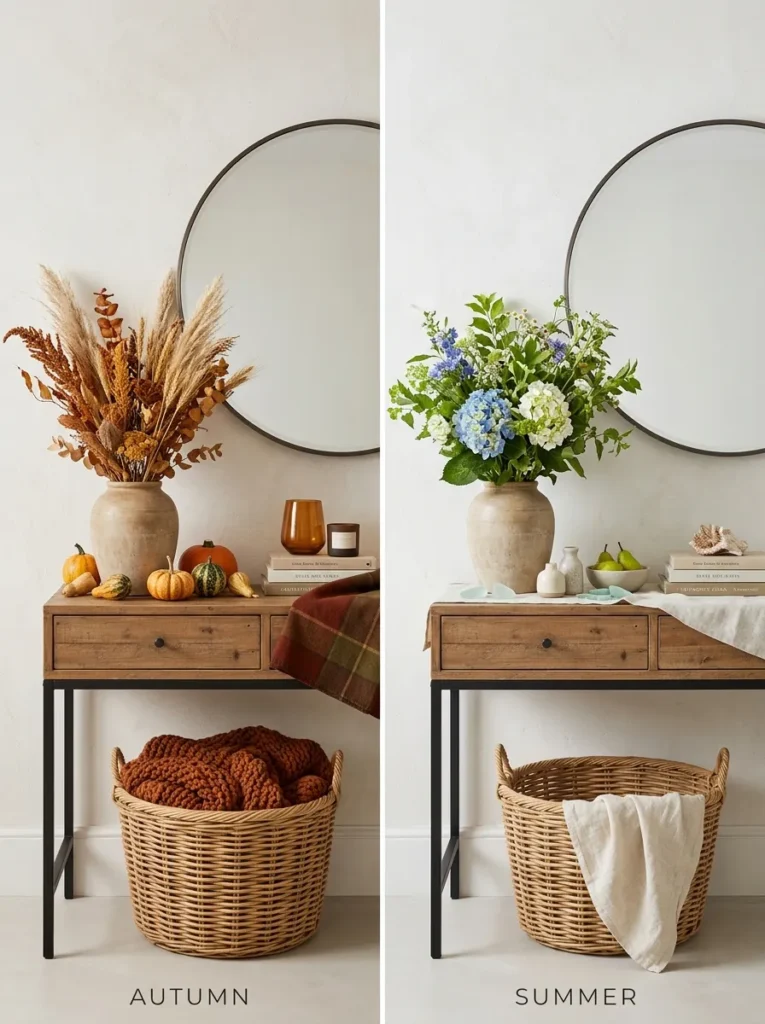
You don’t need to buy new decor to change the look. Swap a few items each season. In autumn, use warm colors and dried stems, and in summer, use light colors and fresh flowers. Keep the base the same and change only a few things.
Storage note: Keep out-of-season items in a labeled box in a closet or under the bed. Wrap fragile items in paper. Check them before you store them, since dust and moisture can damage things.
Swap tip: Change only two or three items at a time. It takes ten minutes and stops the shelf from feeling stale. It suits small spaces where you have limited storage but like a change.
Shop This Look
How to Start
Start with one shelf. Clear it, wipe it, and put back only what you use. Then add one group of three objects and one plant or basket. That’s about 30 minutes, and you’ll see what works before you spend money.
The most common mistake is buying decor before editing. People add objects to a shelf that’s already crowded, and it looks worse. Take things off first, and keep only what earns its place.
Three things under $50 give you the most to work with: a woven basket for hidden storage, a small plant or faux plant, and a set of risers or books to vary heights. Together they usually cost under $50, depending on the brand.
For timing, plan about 30 to 60 minutes per shelf. A starter setup costs roughly $10 to $50 beyond what you own. If you add shelves, brackets, or lighting, the cost goes up, and wall fixings take longer. Do one shelf at a time so you can stop when it looks right.
Shop This Look
What Goes Wrong When You Skip a Step
Most shelf styling problems come from overcrowding, weight, and poor fixing.
Overcrowding is the first one. A shelf with too many items looks cluttered, and nothing stands out. Remove a few things and leave gaps.
Weight is the second. A shelf loaded with books or heavy objects can bow, loosen, or fall. Check the load rating, fix brackets into studs where you can, and spread heavy items across shelves.
Wrong fixings are the third. Plastic anchors in drywall hold less than a stud, and adhesive strips fail if the surface is dusty or the weight is too high. Follow the instructions, clean the surface, and use the right fixing for the wall.
Moisture and sun are the fourth. Bathrooms and sunny windows damage some materials. Use items that handle the conditions, and move delicate pieces.
The last is mismatched scale. Large objects on a tiny shelf feel crowded, and tiny objects on a large shelf disappear. Match the size of the objects to the shelf, and group small items together.
Frequently Asked Questions
How do I style a small shelf in an apartment?
Clear it first, then put back only what you use. Add one group of three items in different heights, a plant or a basket, and leave some space empty. Keep to two or three colors so it looks calm.
How many items should I put on a small shelf?
There’s no fixed number, but fewer items usually look better. A common guideline is to leave about a third of the shelf open. On a 24 inch shelf, one or two groups of three is often enough.
How deep should a small shelf be?
Many floating shelves are around 8 to 10 inches deep, and picture ledges are often 4 to 5 inches. Choose the depth based on what you want to hold. Books and baskets need more depth, and frames and small objects need less.
How do I hang a shelf without drilling?
Use adhesive strips or hooks rated for the weight, and follow the instructions. A freestanding ladder shelf or a leaning bookcase is another option. If you rent, check what your lease allows.
What are the best things to put on a small shelf?
Books, a plant, a small framed print, a basket, and one or two objects you like. Keep items you use often within reach. Avoid heavy items on high or floating shelves.
Final Thoughts
Sixteen ideas cover a lot of ground, and most spaces need only a few of them. They range from simple edits to lighting and storage, and they work with a small budget. Start with the shelf that bothers you most and fix that one.
Today, take everything off one shelf, wipe it down, and put back only what you use. That single step does more than any new decor. Save your favorite small shelf styling ideas to a Pinterest board so you can come back to them when you’re ready for the next shelf.
Keep Exploring
- Small Apartment Storage Ideas That Look Tidy
- Renter-Friendly Wall Decor That Doesn’t Damage Walls
- Cozy Corner Ideas for Tiny Living Rooms