15 Living Room Decor Ideas That Look Expensive
Elevated minimalist living rooms use restraint, quality materials, and a few confident details to look far pricier than the actual furniture budget behind them. This guide gives you 15 living room decor ideas that look expensive, covering color, materials, lighting, and layout.
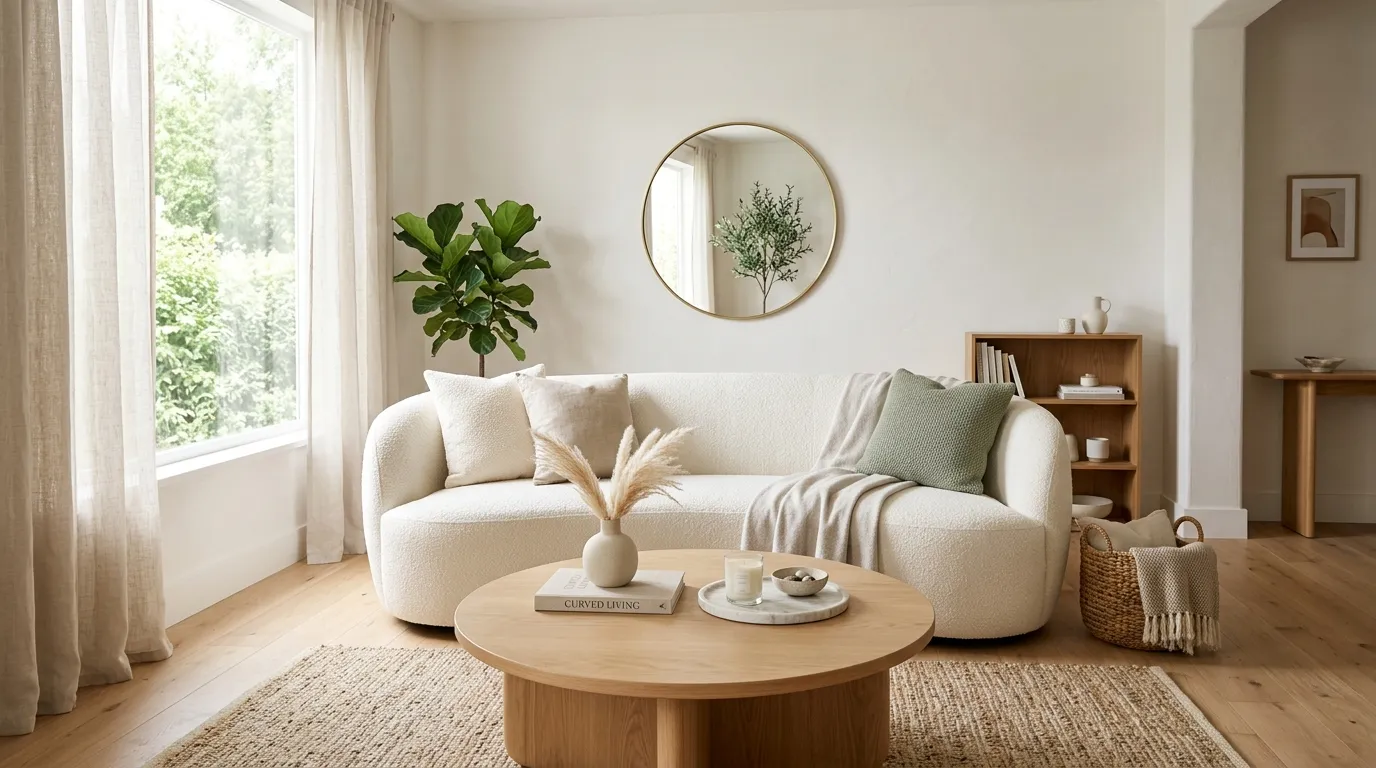
Picture a room where one substantial coffee table anchors everything, where a single oversized art piece replaces a wall of small frames, where boucle and brushed brass catch the light instead of a dozen competing accessories. The mood is calm, considered, and confident — nothing crowded, nothing cheap-looking despite a modest price tag. Here are 15 ideas worth saving — and stealing.
Why Elevated Minimalist Living Rooms Work So Well
Elevated minimalist design draws from Scandinavian restraint and the “quiet luxury” movement that followed high-end hospitality interiors, applying the idea that fewer, better pieces read as more expensive than a room crowded with matching sets. What separates it from strict minimalism is warmth — this style still uses texture and tone, just never clutter.
The palette leans on warm white, greige, and soft charcoal, built from boucle, brushed oak, linen, and brushed brass or matte black hardware. These materials are chosen because they photograph and feel expensive at nearly any price point, unlike glossy laminate or shiny polyester upholstery.
This style is trending as Pinterest search data shows rising interest in “looks expensive on a budget” and “quiet luxury living room,” reflecting a broader shift away from matching furniture sets toward curated, editorial-feeling rooms assembled piece by piece.
Small living rooms handle this style well. Prioritize one substantial furniture piece and a single large art moment first, since both deliver outsized visual impact without needing more square footage.
Style at a Glance
| Element | Trait 1 | Trait 2 |
|---|---|---|
| Philosophy | Fewer, better pieces | Texture over clutter |
| Materials | Boucle, brushed oak | Linen, brushed brass |
| Color palette | Warm white, greige | Soft charcoal |
The 15 Ideas
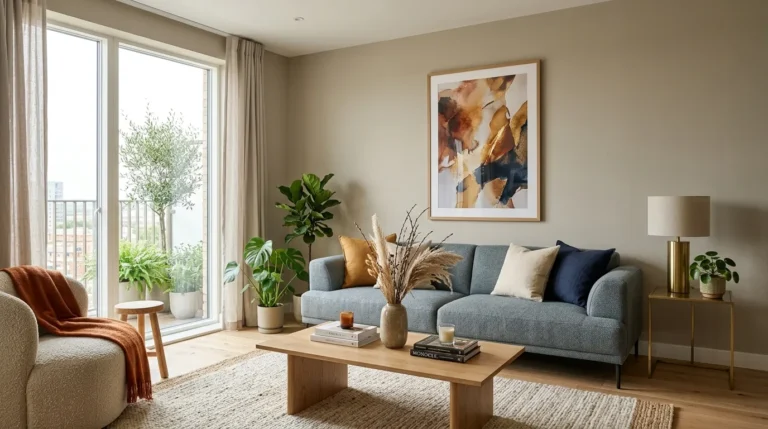
1. One Oversized Piece of Wall Art
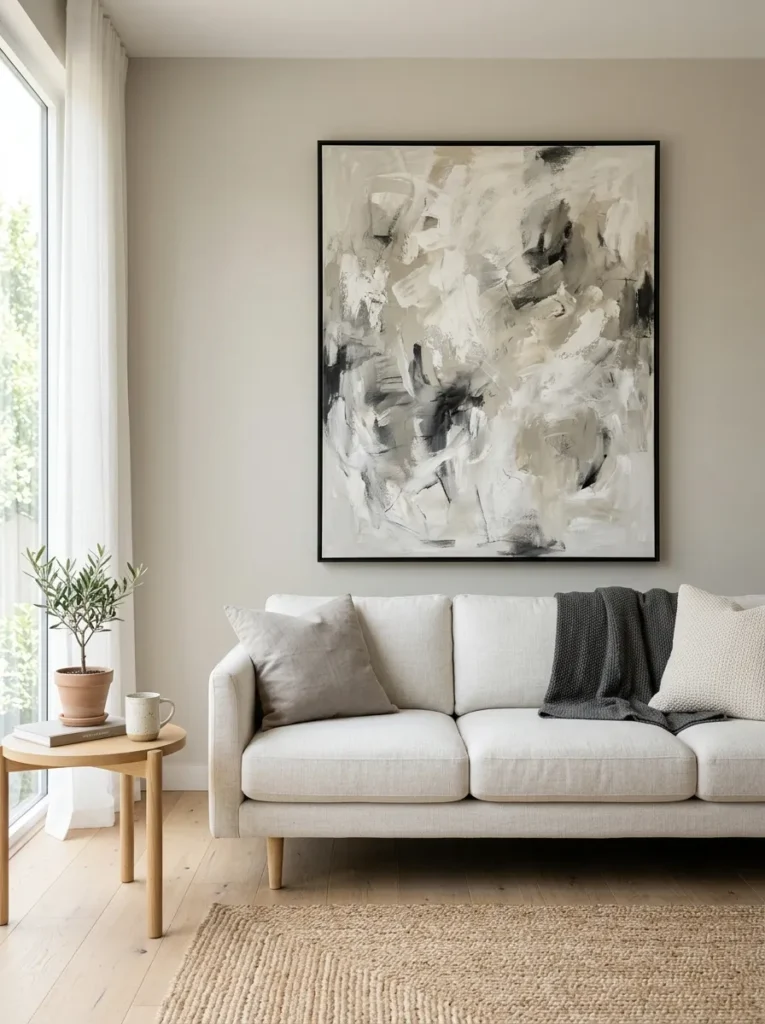
Vibe: The wall feels serene and deliberate, one statement doing the work of ten small frames.
Why it works: A single oversized canvas uses scale and negative space together — the surrounding bare wall becomes part of the composition, a design principle that reads as gallery-considered rather than a cluttered arrangement of mismatched prints.
How to get it: Choose a canvas at least two-thirds the width of your sofa, hung with its center at standard eye level around 60 inches, and resist adding any smaller art nearby.
Quick Win: A $60 abstract canvas print in warm neutral tones delivers the scale effect without a custom commission price tag.
Shop The Look
- Large abstract canvas neutral tones
- Matte black canvas frame
- Picture hanging hardware kit
- Wall level tool
- Canvas wall anchor set
Also view: 17 Living Room Wall Decor Ideas for Every Style
2. Boucle Accent Chair as the Focal Point
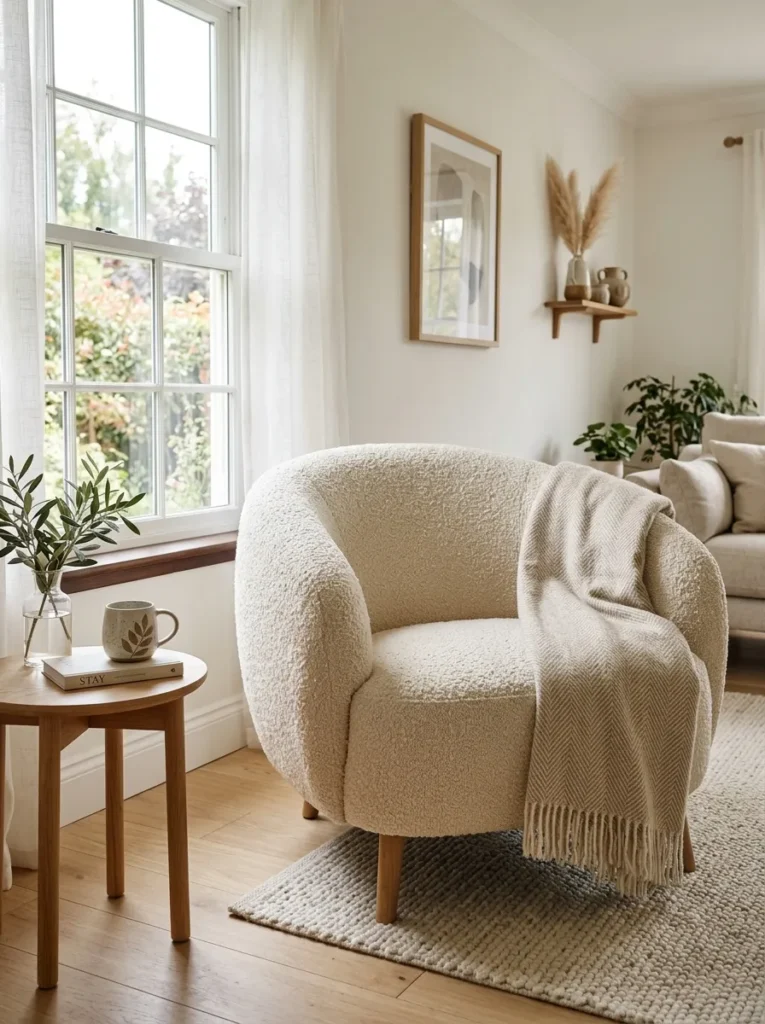
Vibe: The chair feels airy and tactile, drawing the eye without asking for attention.
Why it works: Boucle’s looped texture reads as three-dimensional even in photographs, so one chair does more visual work than several flat-fabric pieces — a material choice that substitutes for buying multiple accent pieces.
How to get it: Choose one curved boucle chair in warm ivory or oat, positioned at an angle to the sofa rather than directly facing it, so it reads as a considered addition rather than a matching set.
Shop The Look
- Curved boucle accent chair
- Wood frame side table
- Small linen throw blanket
- Round brass side table
- Ceramic accent bowl
Also view: 15 Stylish Living Room Aesthetic Ideas That Actually Feel Like You
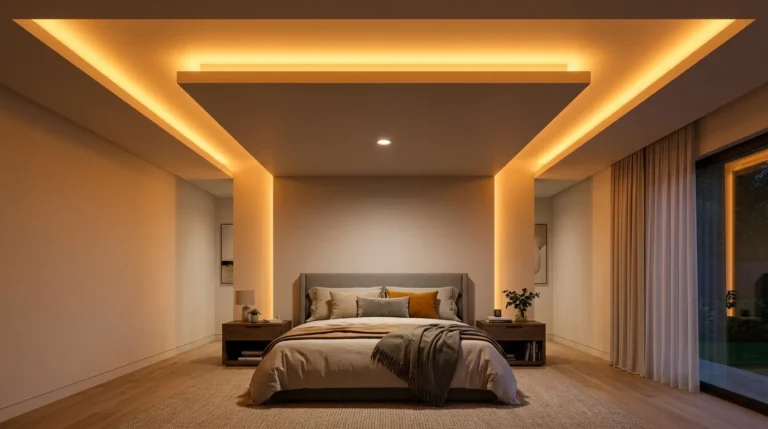
3. Warm Layered Lighting Instead of One Overhead Fixture
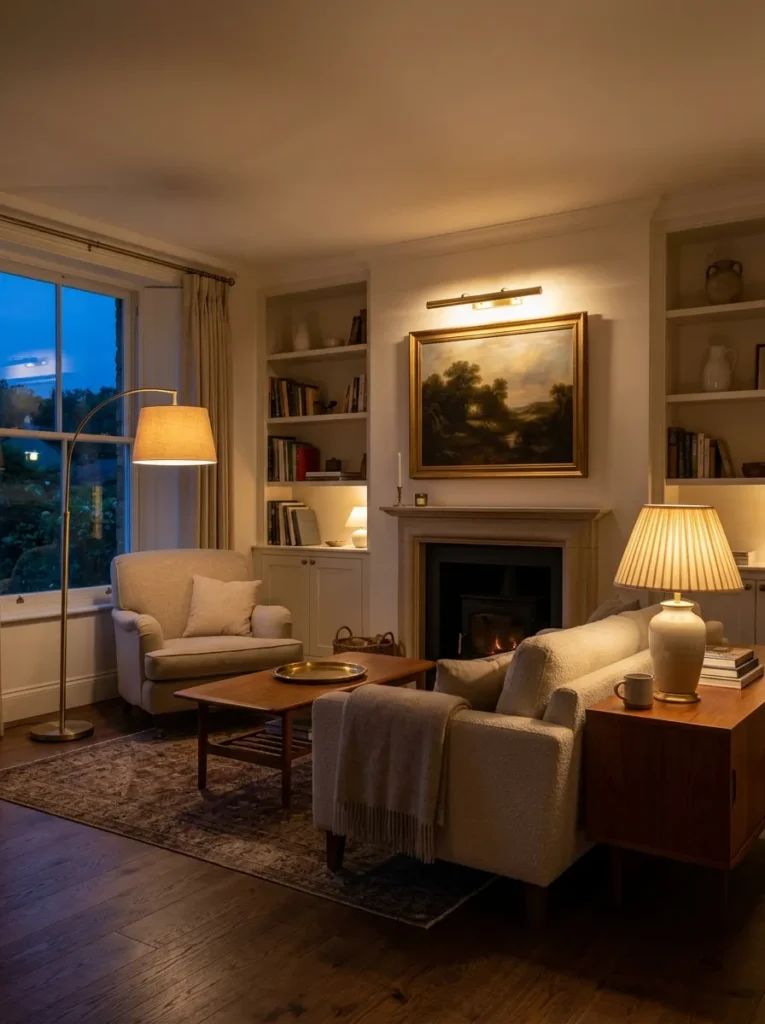
Vibe: The room feels hushed and considered, light coming from several soft points rather than one harsh source.
Why it works: Layering three light sources at different heights lets each be dimmed independently, a lighting principle that avoids the flat, showroom look of a single bright overhead fixture — the same technique used in higher-end hospitality interiors.
How to get it: Add a floor lamp, a table lamp, and one small picture or accent light, keeping bulbs at a consistent warm temperature around 2700K across all three.
Quick Win: A $25 warm-white smart bulb swapped into an existing overhead fixture instantly softens harsh lighting.
Shop The Look
- Brass floor lamp warm shade
- Ceramic table lamp
- Small picture light brass
- Warm white dimmable bulb set
- Lamp dimmer switch attachment
4. Substantial Coffee Table in Solid Wood
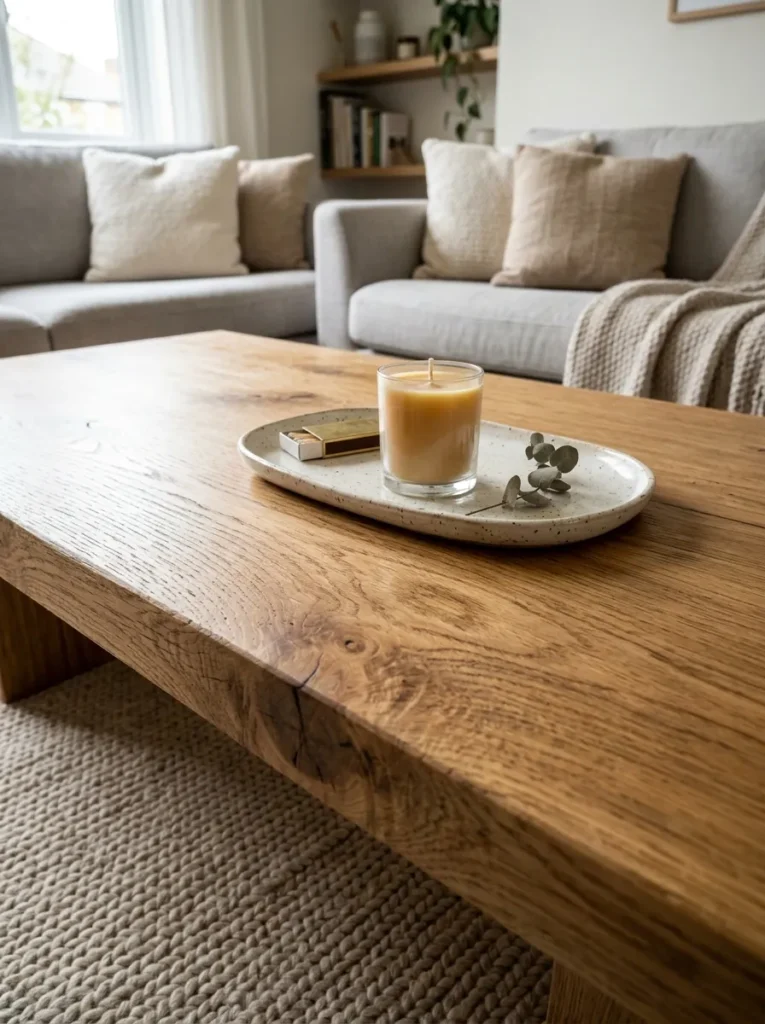
Vibe: The table feels grounded and substantial, anchoring the room with real physical weight.
Why it works: A coffee table with a thick tabletop, at least an inch and a half, reads as higher quality than a thin veneer surface, using visual weight as a proportion principle — the eye associates mass with cost even when the price difference is small.
How to get it: Choose a solid oak or ash coffee table with a tabletop at least 1.5 inches thick, avoiding glass or thin laminate tops that read as less substantial.
Shop The Look
- Solid oak coffee table thick top
- Ceramic serving tray
- Pillar candle set neutral
- Small stack of coffee table books
- Wood coaster set
5. Monochromatic Sofa and Wall Color Pairing
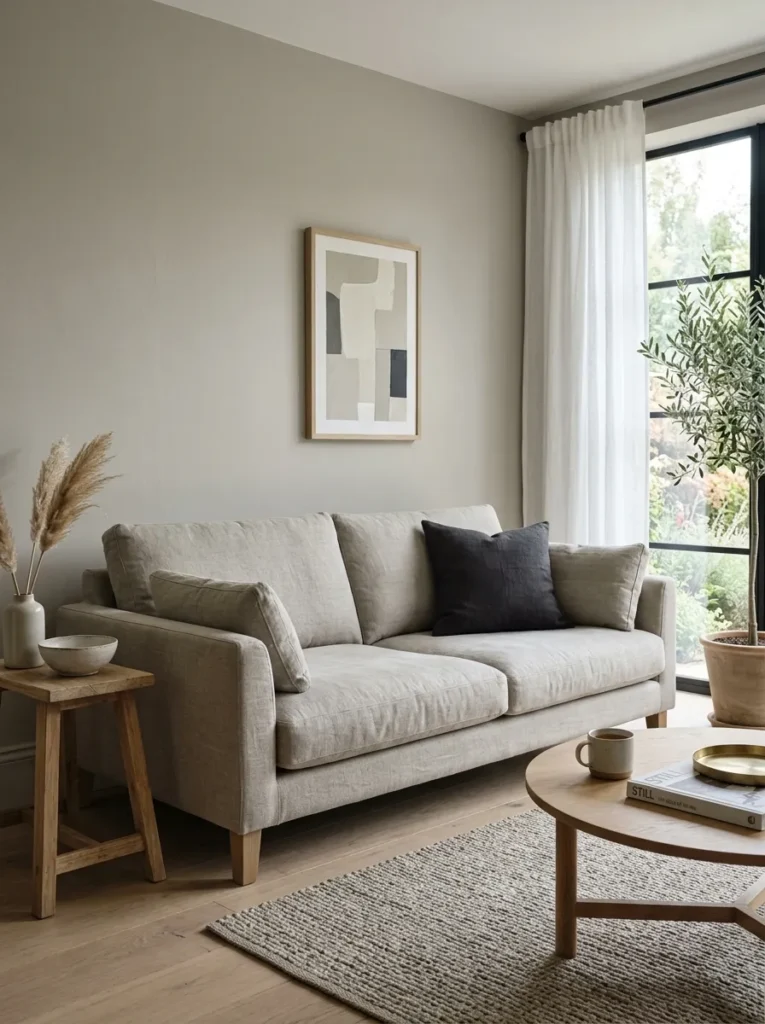
Vibe: The room feels still and cohesive, the sofa nearly disappearing into the wall behind it.
Why it works: Matching the sofa’s tone closely to the wall color removes visual competition between two large surfaces, a color principle where tonal blending makes a room feel larger and more considered than one built from high-contrast, competing colors.
How to get it: Paint the wall in a greige within one or two shades of your sofa’s fabric tone, adding a single darker throw pillow as the only contrast point in the room.
Quick Win: A $20 sample pot lets you test the tonal match against your existing sofa before committing to a full wall.
Shop The Look
- Sample-size interior paint greige
- Linen slipcovered sofa greige
- Dark charcoal throw pillow
- Painter’s tape roll
- Foam paint roller kit
6. Brushed Brass Hardware Swapped Throughout
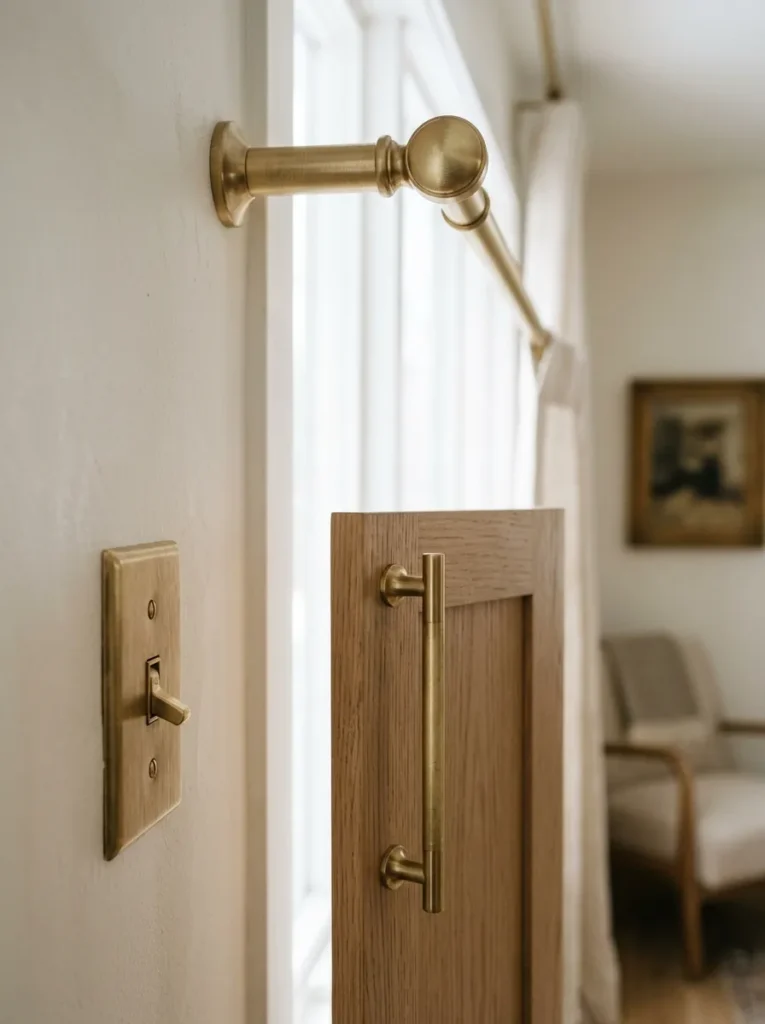
Vibe: The room feels layered and unified, small details quietly reinforcing each other.
Why it works: Matching metal finishes across every visible hardware piece — lamp switches, curtain rods, cabinet pulls — uses consistency as a subtle but powerful principle; mismatched metals are one of the fastest ways a room reads as unplanned.
How to get it: Audit every visible metal fixture in the room and replace mismatched finishes with brushed brass, prioritizing the most visible pieces first, like curtain rods and lamp bases.
Shop The Look
- Brushed brass curtain rod
- Brass lamp switch replacement
- Brass cabinet pull set
- Brass picture hanging hardware
- Brass coaster tray
7. Deep-Seat Sofa with Minimal Throw Pillows
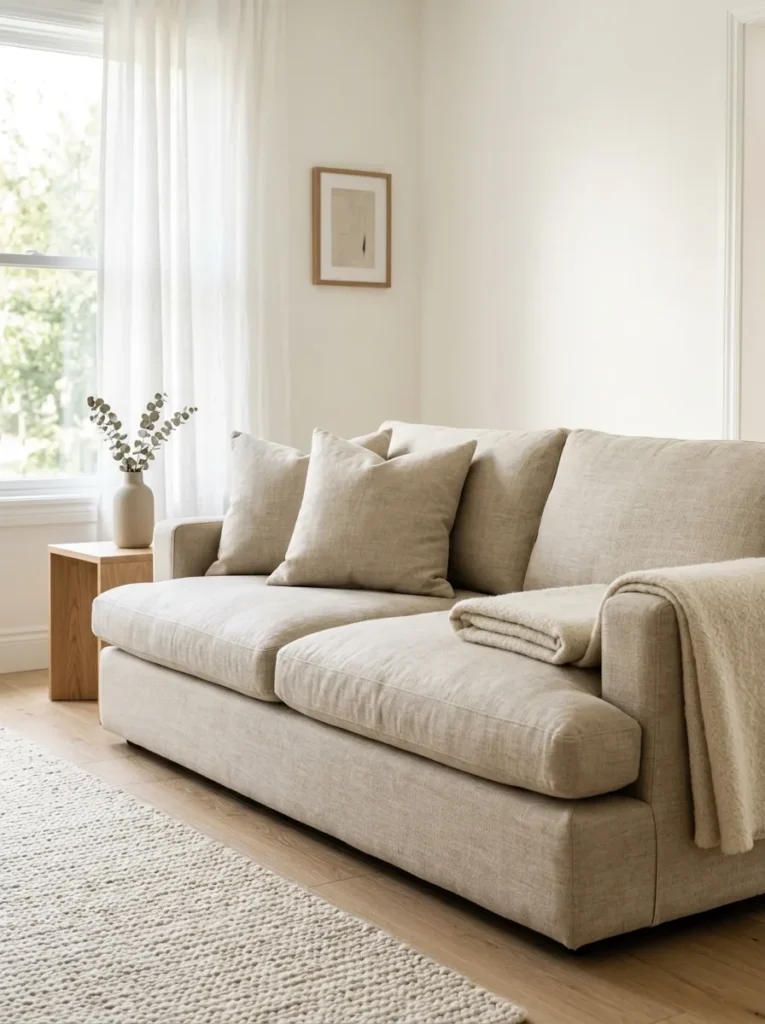
Vibe: The sofa feels serene and inviting, its scale doing the work that a pile of pillows usually tries to.
Why it works: A deep seat depth, around 40 inches, reads as a considered, higher-end proportion choice on its own, so styling it with just two pillows rather than seven avoids the cluttered look that actually cheapens a genuinely nice sofa.
How to get it: Choose a sofa with a seat depth of at least 38 inches, and limit styling to two matching pillows and one folded throw rather than a mixed pile.
Quick Win: Removing pillows down to just two per sofa cushion instantly makes any existing sofa look more editorial.
Shop The Look
- Deep-seat linen sofa oat
- Matching linen pillow pair
- Folded wool throw blanket
- Down pillow insert set
- Low wood console table
8. Curved Furniture Silhouettes Throughout
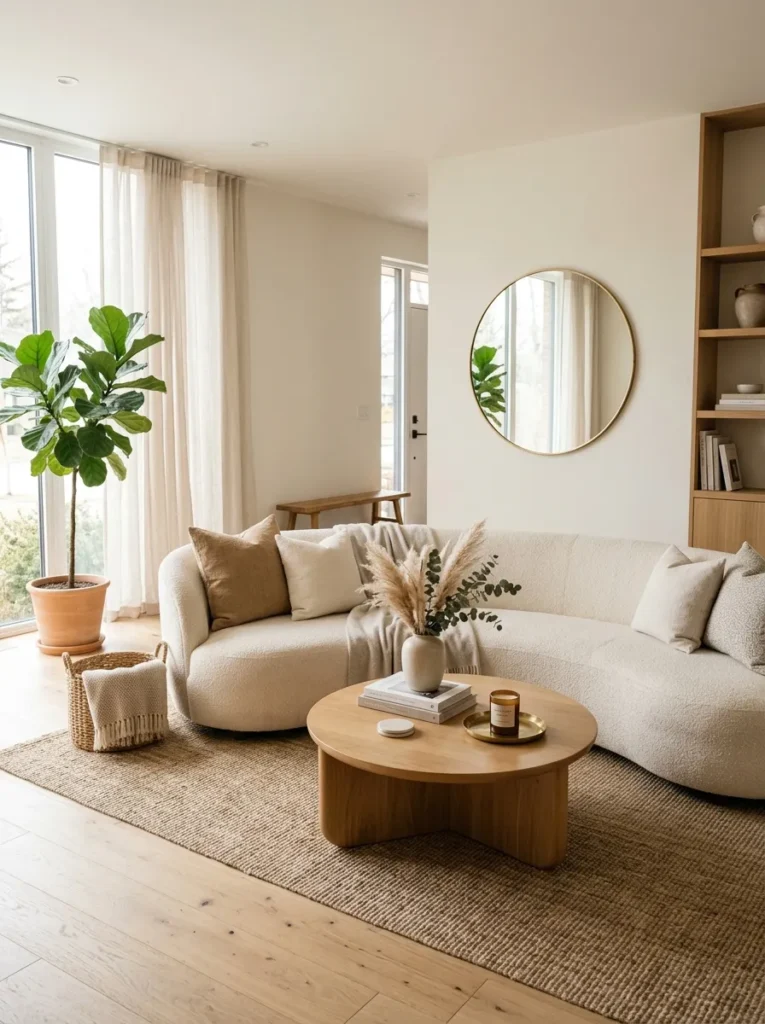
Vibe: The room feels airy and gentle, every edge softened rather than sharp.
Why it works: Choosing curved silhouettes for at least two major pieces applies a consistent design principle throughout the room — rounded forms photograph as more considered and current than an all-rectangular furniture layout, which can read as generic.
How to get it: Pair a curved-back sofa with a round or oval coffee table, keeping at least one hard rectangular element, like a rug, for contrast so the room doesn’t feel overly soft.
Shop The Look
- Curved back sofa neutral
- Round wood coffee table
- Round wall mirror
- Curved accent chair
- Oval jute area rug
9. Open Layout with Furniture Pulled Off the Walls
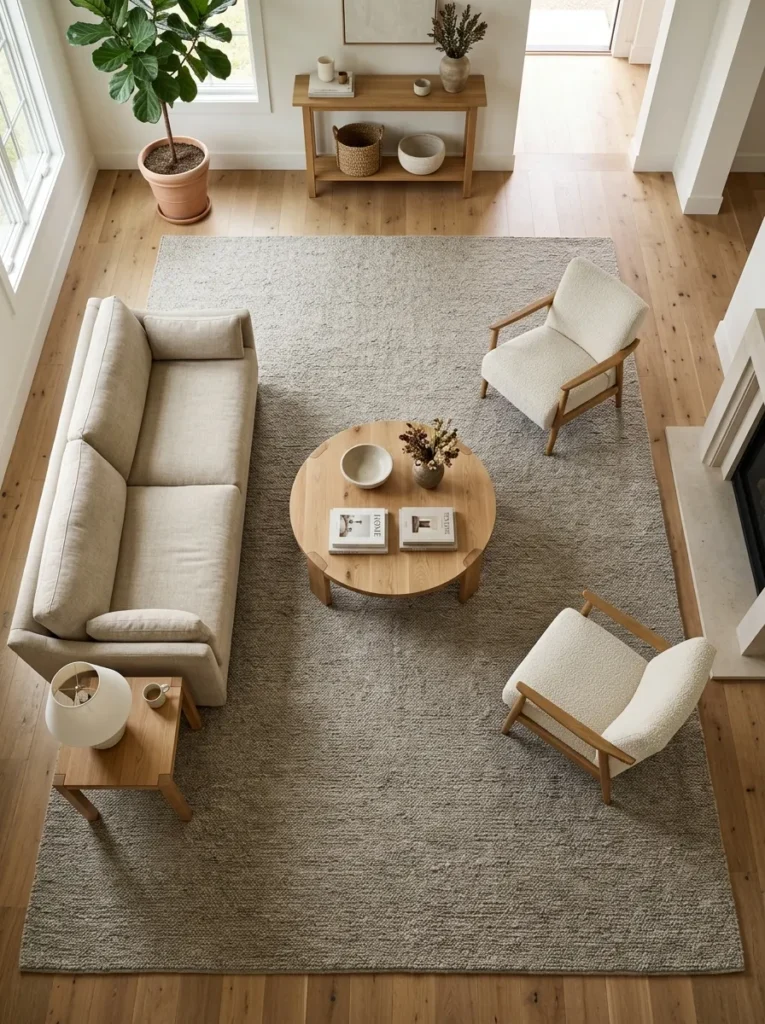
Vibe: The room feels still and composed, furniture floating rather than lining the perimeter.
Why it works: Pulling seating away from the walls into a central conversational grouping applies a layout principle borrowed from professionally staged rooms — furniture pushed against walls reads as apartment-standard, while a floating arrangement reads as designed.
How to get it: Position the sofa at least a few feet from the back wall if space allows, anchoring the grouping with a rug sized so all furniture legs sit at least partially on it.
Shop The Look
- Large area rug neutral
- Matching accent chair pair
- Round coffee table
- Console table for behind sofa
- Floor lamp for corner
10. Single Statement Plant in a Substantial Pot
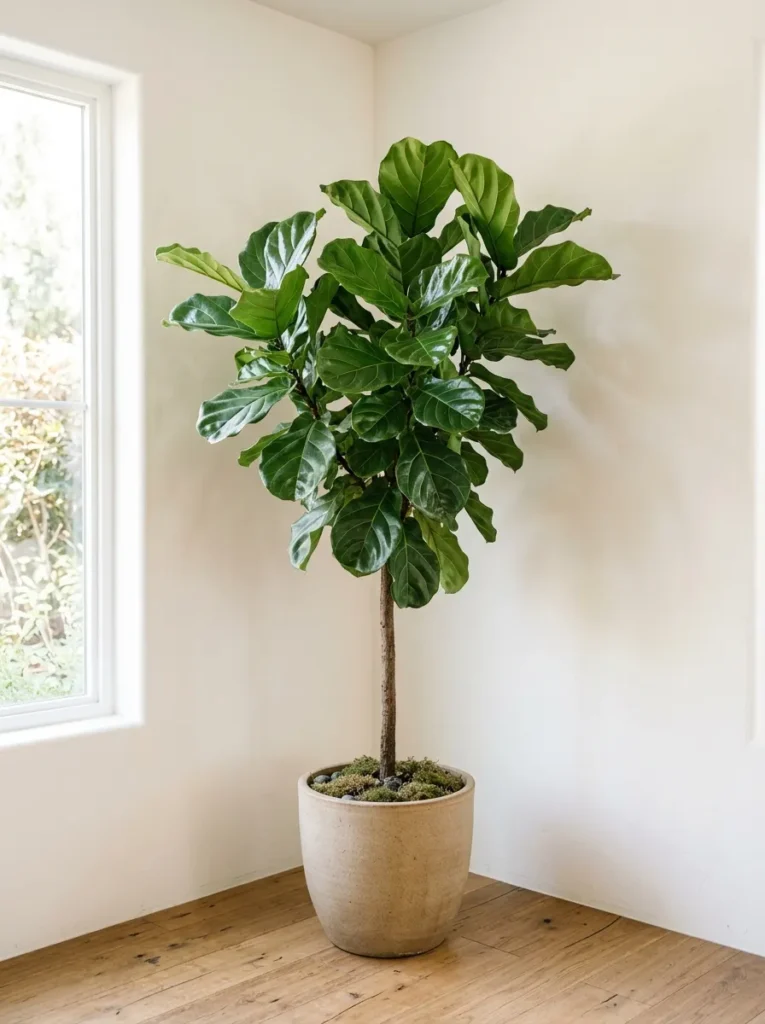
Vibe: The corner feels layered and alive, one plant filling space that would otherwise sit empty.
Why it works: A single tall plant in a substantial pot fills vertical negative space more convincingly than several small plants scattered around, using scale to solve the same “empty corner” problem with one confident gesture instead of many small ones.
How to get it: Choose one plant reaching at least five feet tall in a matte ceramic pot sized proportionally, roughly 14 to 16 inches in diameter, rather than a small starter pot.
Quick Win: A high-quality faux fiddle leaf fig under $70 solves the scale problem without any plant care commitment.
Shop The Look
- Tall faux fiddle leaf fig
- Matte ceramic floor planter
- Plant stand riser
- Small watering can display
- Woven plant pot cover
11. Symmetrical Console Styling Behind the Sofa
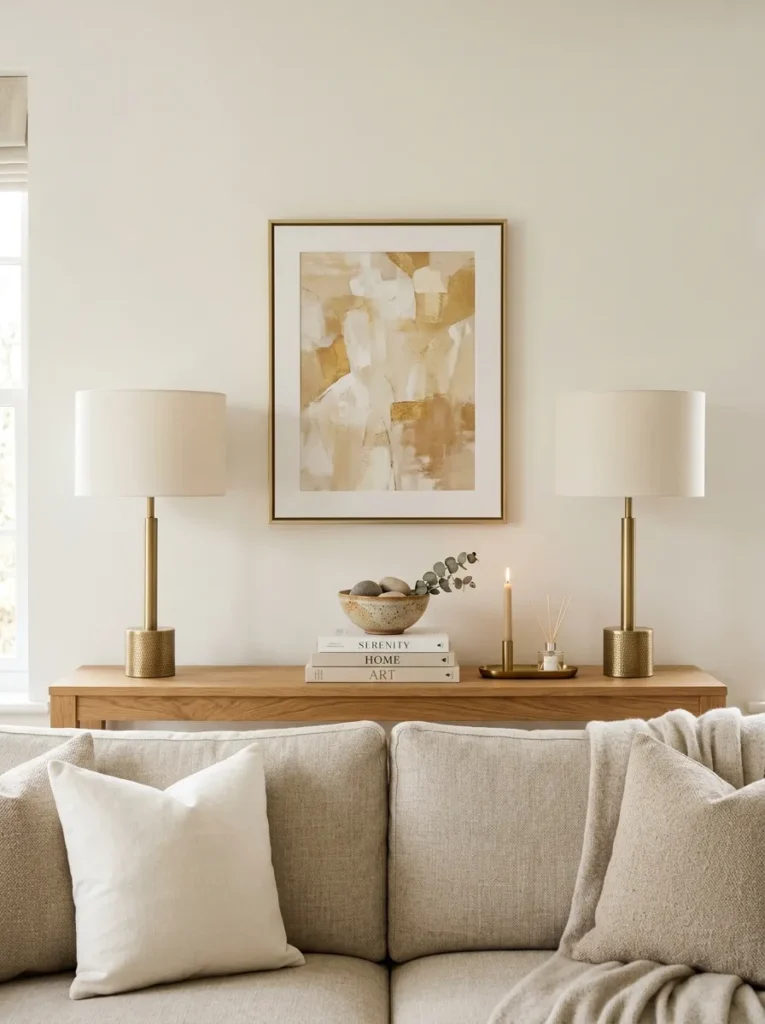
Vibe: The console feels serene and balanced, a small vignette that photographs like a magazine spread.
Why it works: Styling a console with a matching pair of lamps flanking one centered object uses classic symmetry as a principle — the eye reads perfectly balanced arrangements as more expensive and intentional than an asymmetric scatter of mismatched items.
How to get it: Center one object, a bowl or small sculpture, on the console, flank it with a matching lamp pair, and resist adding more than three total items to the surface.
Shop The Look
- Oak console table
- Ceramic table lamp pair
- Small ceramic centerpiece bowl
- Framed art piece centered
- Brass catchall tray
12. Wool or Wool-Blend Area Rug in a Substantial Size
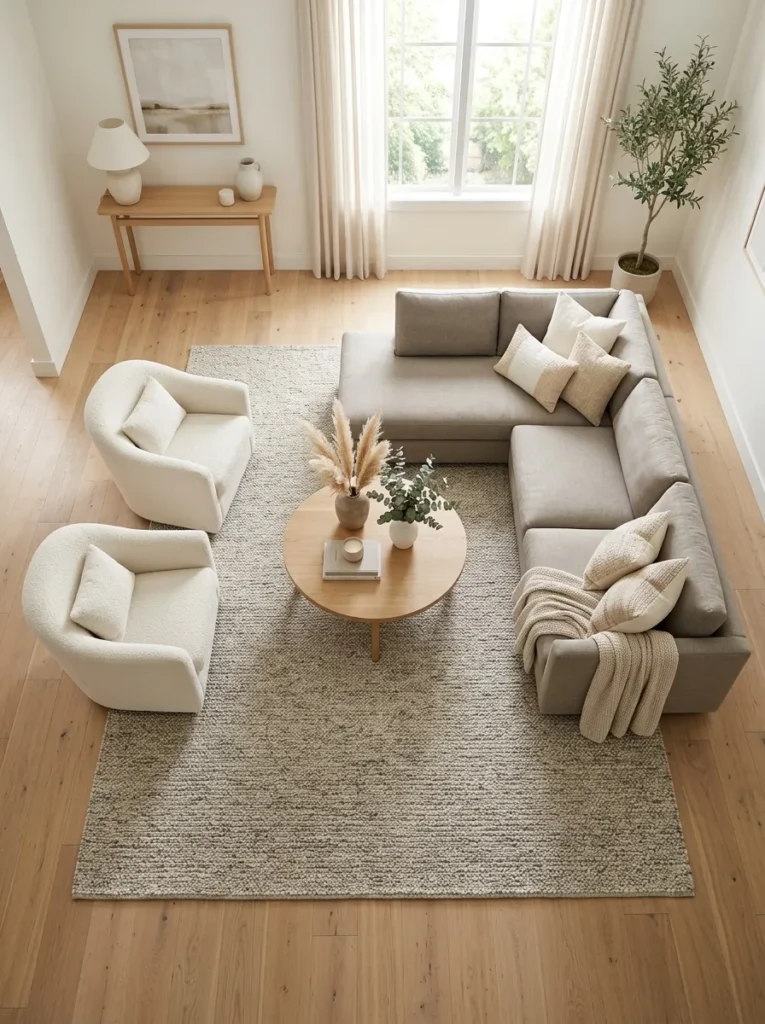
Vibe: The floor feels grounded and generous, the rug doing far more visual work than a small, undersized one would.
Why it works: An undersized rug is one of the fastest ways a room reads as budget, since furniture legs floating off the edge breaks the sense of a unified floor plane — sizing up solves this proportion problem directly.
How to get it: Choose a wool or wool-blend rug large enough for at least the front legs of every seating piece to rest on it, typically 8 by 10 feet or larger for a standard living room.
Shop The Look
- Wool blend area rug 8×10 greige
- Non-slip rug pad
- Rug edge binding tape
- Furniture felt pads
- Wool rug protector spray
13. Matte Black or Bronze Window Trim Detail
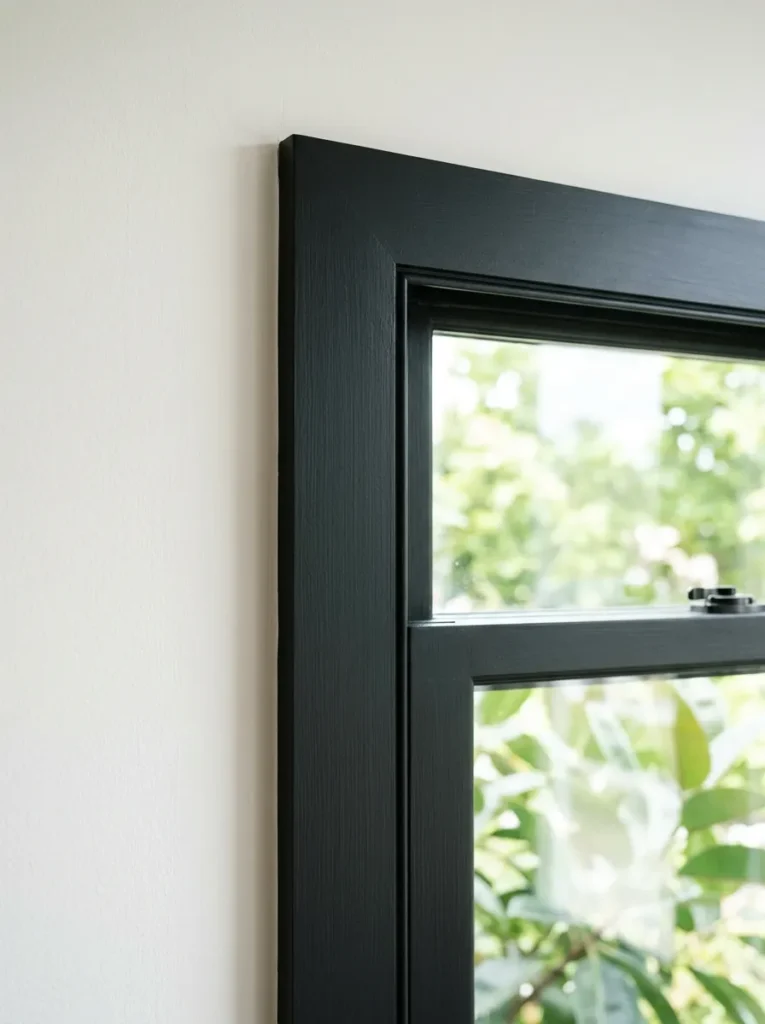
Vibe: The window feels still and crisp, one small architectural detail sharpening the whole wall.
Why it works: Painting window trim in matte black rather than leaving it white creates defined contrast that frames the window like art, a detailing technique borrowed from architectural renovation that reads as a considered design choice rather than a decor add-on.
How to get it: Paint interior window trim and sash in matte black, keeping the surrounding wall in warm white for maximum contrast definition.
Quick Win: A $25 quart of matte black trim paint covers a standard window’s trim in one afternoon.
Shop The Look
- Matte black trim paint quart
- Angled trim paintbrush
- Painter’s tape roll
- Trim paint edge guide tool
- Warm white wall paint sample
14. Compact Layout Using a Loveseat Instead of a Full Sofa
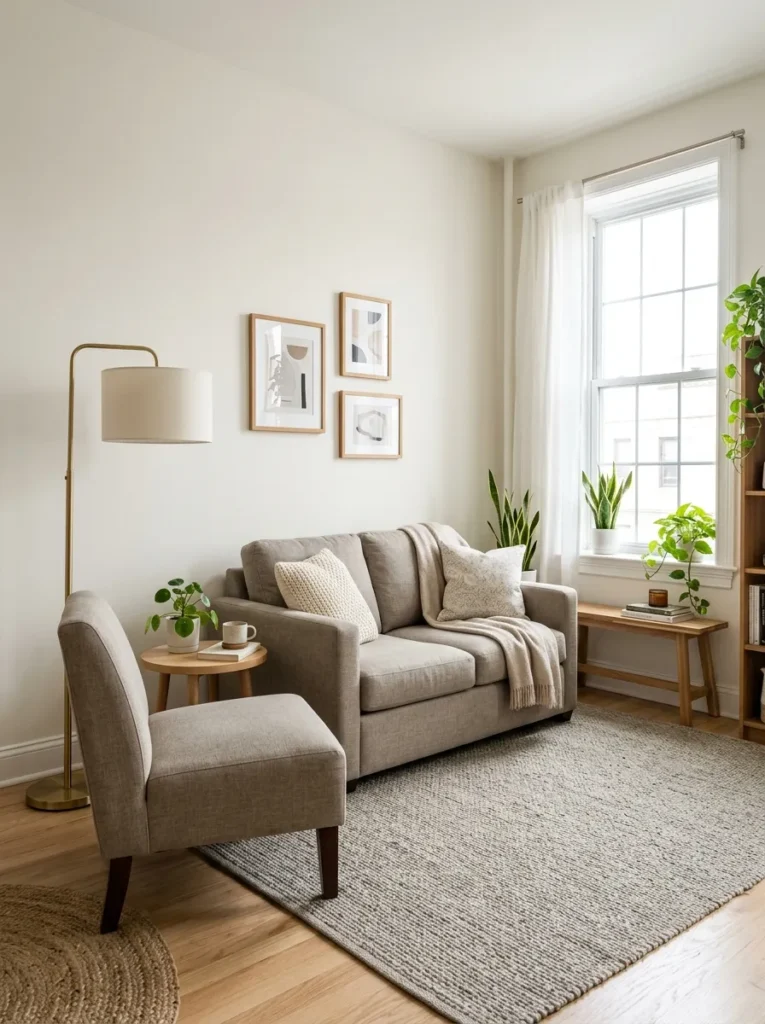
Vibe: The room feels airy and proportional, nothing crammed to fit furniture too large for the space.
Why it works: Choosing a loveseat sized correctly for a small room, rather than squeezing in an oversized sofa, solves the specific limitation of compact living rooms — correct proportion reads as intentional design, while an oversized piece crammed into too little space reads as a budget compromise.
How to get it: Measure your room’s walkway clearance first, then choose a loveseat or apartment-size sofa that leaves at least 30 inches of clear path on all sides.
Shop The Look
- Apartment-size loveseat greige
- Matching accent chair
- Slim floor lamp
- Small round side table
- Compact area rug
15. One Confident Textured Throw Blanket Instead of Several
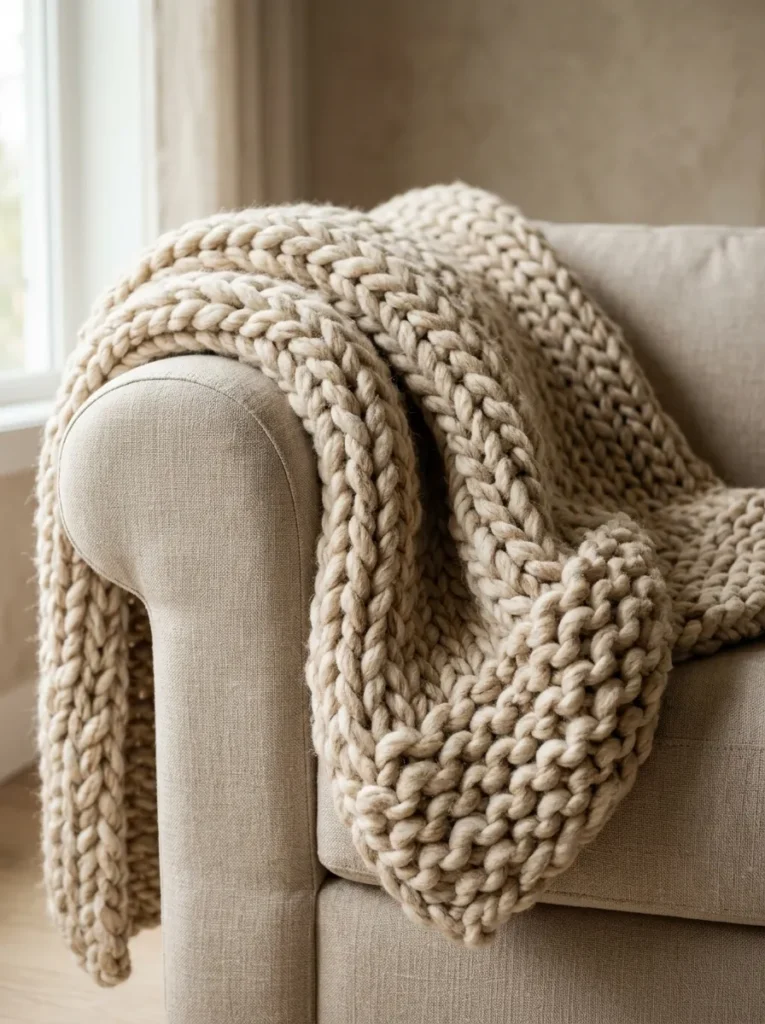
Vibe: The sofa feels warm and finished, one substantial layer doing the work several thin throws couldn’t.
Why it works: A single, generously sized chunky knit throw reads as higher quality and more intentional than multiple thin blankets stacked together, using restraint the same way this style handles pillows — one confident texture choice beats several competing ones.
How to get it: Choose one oversized chunky knit throw, at least 50 by 70 inches, and drape it in a single loose fold over one arm rather than layering several thinner blankets.
Quick Win: A $35 chunky knit throw instantly upgrades an existing plain sofa without touching anything else in the room.
Shop The Look
- Chunky knit throw blanket oat
- Sofa arm drape clip
- Small woven basket for extra throws
- Neutral linen sofa slipcover
- Wood blanket ladder
How to Start Your Elevated Minimalist Living Room Transformation
The single best first move is removing at least a third of what’s currently on your surfaces — side tables, mantels, shelves. Since this style depends on restraint above all else, editing down existing clutter costs nothing and immediately makes every remaining piece read as more intentional.
The most common mistake is buying several small, inexpensive accent pieces instead of investing in one substantial item, which results in a room that feels busy rather than curated. Fix it by choosing one larger, better piece — a coffee table or a rug — and skipping the smaller add-ons entirely.
Three items under $50 that make an immediate difference: a $35 chunky knit throw, a $25 quart of matte black trim paint, and a $20 sample pot to test a tonal wall-and-sofa pairing.
A full room transformation realistically takes two to three weekends if you’re painting trim, sourcing furniture, and rehanging art, or a single weekend if you’re focused on editing clutter and swapping textiles. Budget $300–$600 for a starter version using existing furniture, or $1,500–$3,000 for a full room with a new sofa, rug, and coffee table.
Frequently Asked Questions About Elevated Minimalist Living Rooms
What’s the difference between this style and strict minimalism?
Strict minimalism often removes texture and color almost entirely, favoring stark white and glass, while elevated minimalist rooms keep warmth through boucle, linen, and wood tones. The restraint is about quantity of items, not about stripping away texture or comfort.
What colors make a living room look more expensive?
Warm white, greige, and soft charcoal read as the most expensive base palette, since they photograph as tonal and considered rather than stark or cold. Avoiding high-contrast primary colors and sticking to one accent tone keeps the room from feeling like separate impulse purchases.
How much does it cost to make a living room look expensive?
An editing-and-textile-focused refresh using existing furniture runs $150–$400, since removing clutter and adding one substantial rug or throw does most of the visual work. A fuller refresh with a new sofa and coffee table typically costs $1,500–$3,000, while a full custom room can run higher depending on furniture quality.
Does this style work in a small apartment?
Yes — a properly sized loveseat, one oversized plant, and a single large art piece are the three highest-impact choices for a small space, since correct proportion matters more than square footage. Pulling furniture even slightly off the walls, when possible, also helps a small room read as considered rather than cramped.
What’s the most important element to get right first?
Editing matters most, since a room can have expensive furniture and still look cluttered with too many small accessories. Remove excess items before buying anything new, then invest in one or two substantial pieces — a rug or coffee table — rather than several smaller ones.
Ready to Create Your Own Expensive-Looking Living Room?
These 15 ideas cover everything from oversized art and layered lighting to substantial rugs and confident restraint with throw pillows, so there’s a starting point whether you’re refreshing one corner or planning a full room overhaul. This kind of transformation happens through subtraction as much as addition — clearing off one cluttered shelf tonight is a real step toward the whole look. Today, walk your living room and remove one small, unnecessary item from every surface you see. Once it’s done, you’ll notice the room already reads calmer and more considered — proof that looking expensive is often about restraint before it’s ever about spending. Pin your favorite boucle or console styling idea now, before clutter creeps back in.