Easy DIY Kitchen Decor Ideas You Can Finish in a Weekend
A kitchen can feel completely different with a few simple DIY updates. You do not need a full renovation or a big budget to make the space warmer and more inviting. Easy DIY kitchen decor ideas can help you add color, texture, storage, and personality without turning the weekend into a major project.
I think the best kitchen projects are the ones you can start on Saturday and enjoy by Sunday evening. A painted tray, handmade wall art, updated shelves, or a simple centerpiece can make a surprising difference. In my opinion, small changes often work better than filling every corner with new decor. The goal is to make the kitchen feel like yours.
This guide brings together easy projects that are practical, attractive, and realistic for a weekend. You will find ideas for walls, counters, cabinets, open shelves, and small empty spaces. Some projects need basic craft supplies, while others can be made with items you may already have at home.
So, grab your supplies and choose a project that fits your style and skill level. You do not need to finish everything at once. Start with one idea, give it your own touch, and you may be surprised by how much character a simple weekend project can add to your kitchen.
Pick One Weekend Project, Not a Whole Kitchen Makeover
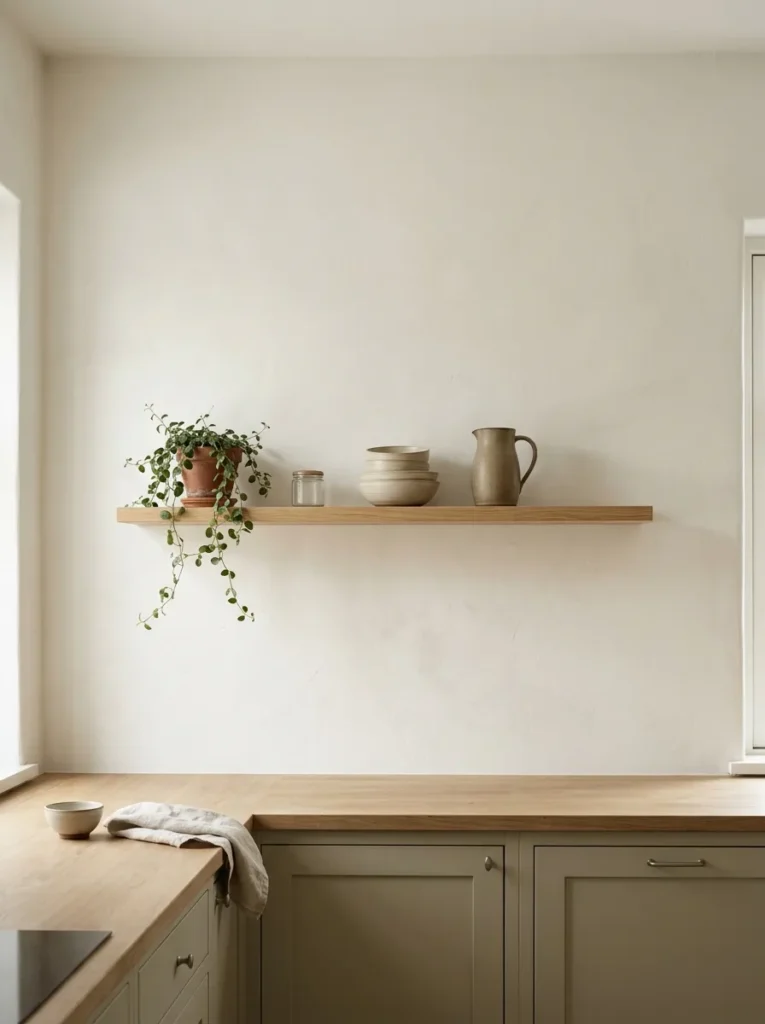
A kitchen starts to look cluttered when every surface is decorated at once. Painted cabinets, a new runner, hanging planters, a chalkboard wall, and a dozen styled jars all compete for the same attention.
Instead, choose one project to lead the room and let the rest of the kitchen stay calm around it.
That could be new cabinet pulls and one painted island, or two floating shelves styled with a few good pieces. You finish it, step back, and enjoy it, instead of leaving five half-done projects on the counter.
Here is an easier way to think about it.
| Big Makeover Mindset | Weekend Project Approach |
|---|---|
| Redo walls, cabinets, shelves, and textiles together | Pick one focal project and finish it completely |
| Buy a matching decor set | Mix handmade pieces with things you already own |
| Start without checking supplies | List materials and measure before Saturday morning |
| Decorate every counter and ledge | Leave clear space around the one styled area |
| Aim for a magazine kitchen | Aim for a kitchen that feels like yours and is easy to clean |
You are not limiting your creativity. You are giving one idea enough room to look intentional.
Planning note: Measure first and buy second. Write down the width of the shelf wall, the cabinet door size, and the window before you shop, so you only bring home what fits.
Paint and Hardware Updates That Change the Room in a Few Hours

If you want the biggest visual change for the least effort, start with color and hardware. Both are quick, both are forgiving, and both change how the whole kitchen reads.
Swapping cabinet knobs and pulls is the fastest upgrade. Matte black, brushed brass, or simple ceramic can make plain cabinets look custom, and the job takes an afternoon with a screwdriver.
Painting one element works better than painting everything. A single island, a row of lower cabinets, or the inside of an open shelf unit gives you a color moment without a week of work.
A narrow peel-and-stick tile strip behind the stove or sink can add pattern without a full backsplash. An accent wall in a deep green, soft blue, or warm clay can frame open shelves nicely.
This quick guide can help you choose.
| Project | Time | Approx. Cost | Best For |
|---|---|---|---|
| Swap cabinet knobs and pulls | 1 to 3 hours | $20 to $80 | Plain or builder-grade cabinets |
| Paint an island or lower cabinets | 1 weekend (with dry time) | $40 to $90 | Adding one strong color |
| Peel-and-stick tile strip | 2 to 4 hours | $25 to $60 | Renters or small backsplash areas |
| Paint one accent wall | 3 to 5 hours | $30 to $60 | Framing open shelves or a dining nook |
Costs are rough estimates and vary by region and brand.
Prep note: Degrease cabinets and walls before painting. Kitchens collect invisible cooking oil, and paint will peel if it goes on over a greasy surface. Wash with a degreasing cleaner, rinse, let dry, and lightly sand glossy finishes.
Finish note: Choose a satin or semi-gloss paint for cabinets and kitchen walls so you can wipe away splatters without damaging the color.
Open Shelf and Wood Projects That Add Warmth
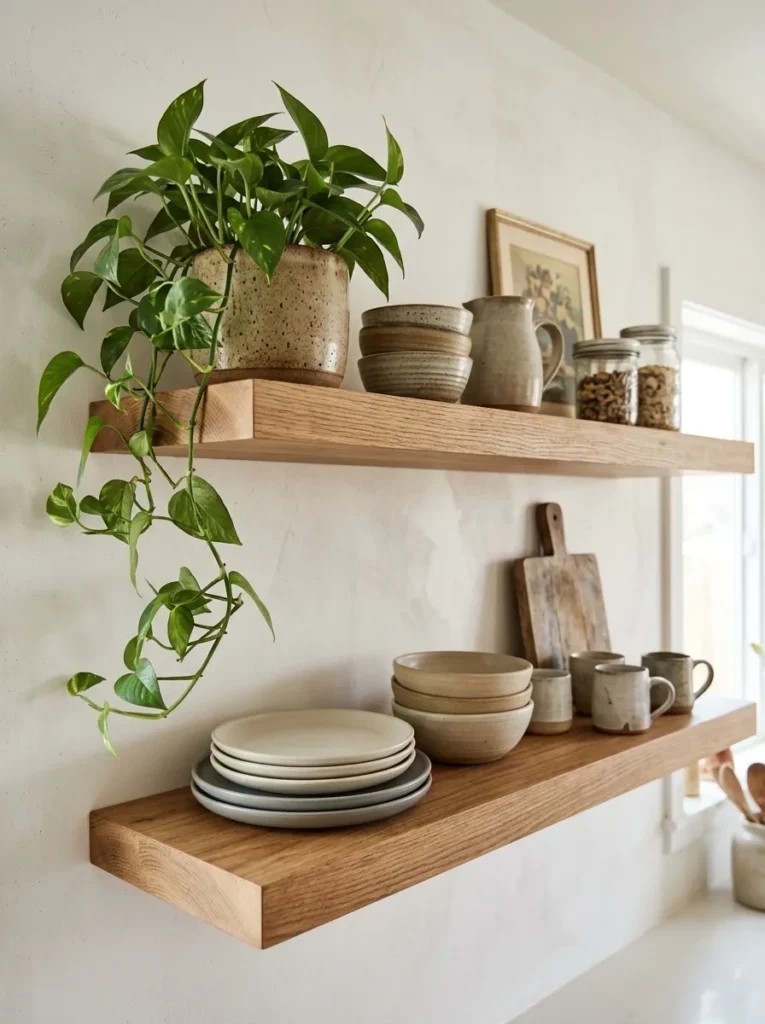
Wood is the easiest way to soften a kitchen full of hard surfaces. Even a small piece brings texture, and most wood projects are beginner friendly.
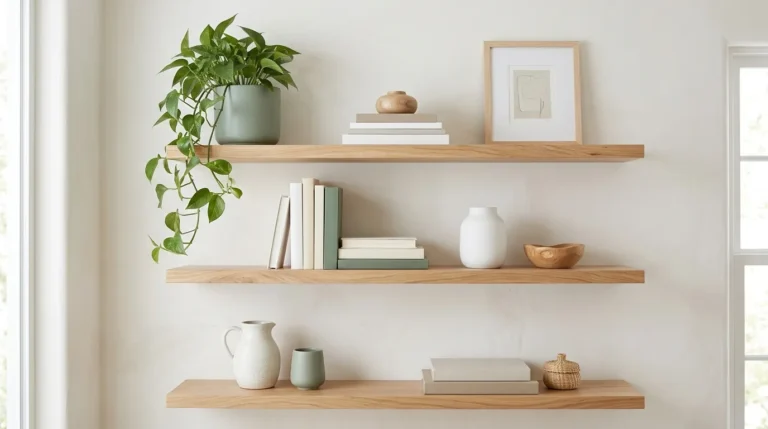
Floating shelves are the classic weekend build. A pine or oak board, a pair of hidden brackets, and a coat of stain give you a clean ledge for dishes, plants, and cookbooks.
Smaller pieces work well too. A set of wooden risers lets you stack cups or jars at different heights, and a simple rail with S-hooks keeps mugs or utensils within reach while adding a little rhythm to the wall.
A few projects to consider:
- Stain a plain wooden cutting board and lean it behind the stove as display.
- Build a two-step riser for the counter to hold oils, salt, and a small plant.
- Mount a short rail near the sink for towels and a hanging brush.
- Sand and oil an old bread board or tray so it can sit on the shelf as part of the styling.
Safety note: Anchor shelves into studs or use rated wall anchors, and check the weight rating before loading them with heavy plates. Keep wood decor away from direct heat, and use a food-safe finish on anything that will touch food.
Styling tip: Leave a third of each shelf empty. Space around your pieces is what makes them look chosen rather than stored.
Fabric Projects You Can Sew or No-Sew
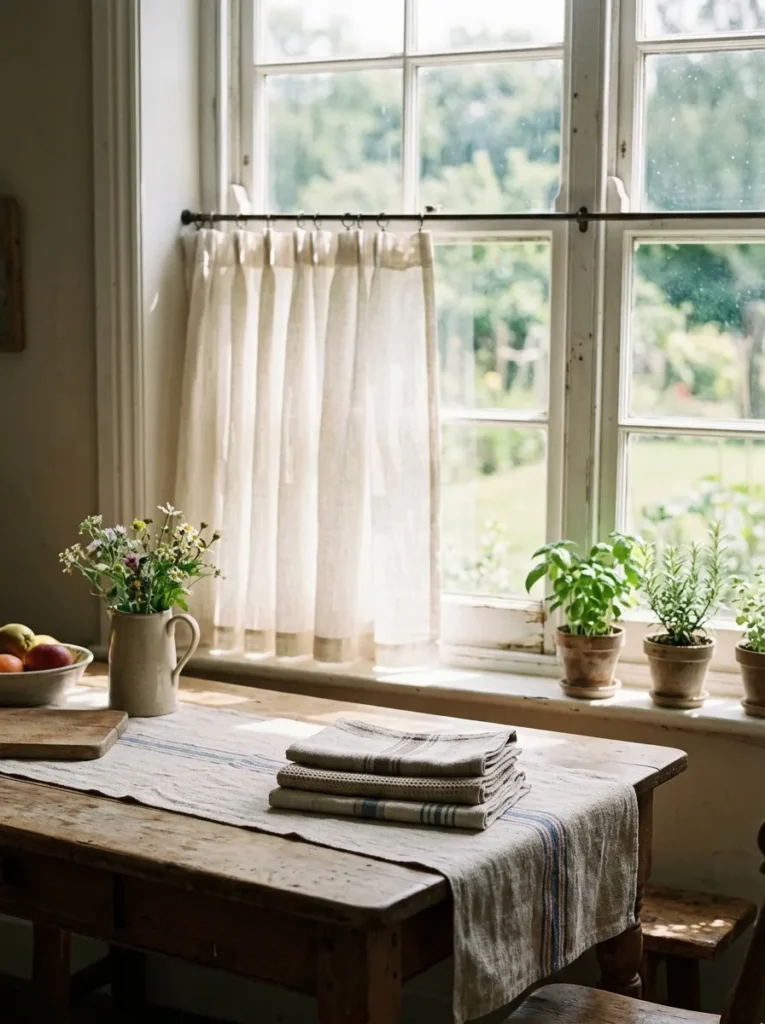
Textiles add color and softness to a room that is mostly hard surfaces. They are also the easiest decor to change with the seasons.
Cafe curtains are a good starting point. Half-height panels let light in while adding pattern, and a tension rod makes the project nearly instant. If you do not sew, hemming tape or fabric glue handles the edges.
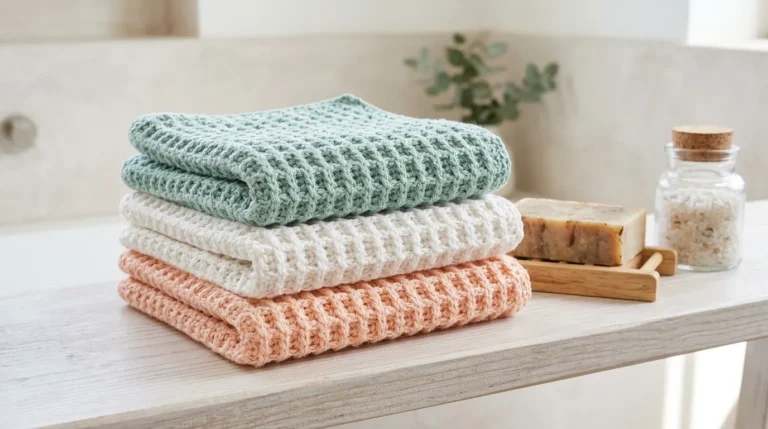
Tea towels, a table runner, and chair cushion covers are quick next steps. A plain linen towel with a simple stamped or embroidered detail looks handmade in a good way.
Here is a short guide to choosing fabrics for a kitchen.
| Project | Fabric to Look For | Why It Works |
|---|---|---|
| Cafe curtains | Cotton or linen blend | Light, easy to wash, and hangs well |
| Tea towels | Flour sack cotton or linen | Absorbent and dries quickly |
| Table runner | Medium-weight cotton or canvas | Holds its shape and handles spills |
| Chair cushion covers | Tightly woven cotton or outdoor fabric | Resists stains and wear |
A few easy combinations to try:
- Pair a small checked curtain with solid tea towels in one matching color.
- Use one patterned fabric in two places only, such as the curtain and a cushion.
- If you want a calmer look, stick to natural linen and add color with a single towel.
Care note: Pre-wash fabric before cutting. Kitchen textiles get washed often, and untreated cotton can shrink enough to ruin the fit after the first laundry day.
Wall Art and Greenery That Look Styled, Not Cluttered

Wall art and plants are where a kitchen gets its personality. They are also where it is easiest to overdo things.
The trick is to choose one or two, give each a clear spot, and keep the space around them open.
Framed handwritten recipes make personal, low-cost art. Print a family recipe in your own handwriting or a clean typeface, place it in a simple frame, and hang it near the table or above a shelf.
A small herb planter on the windowsill, a pair of hanging pots, or a single stem in a bottle brings life without taking up counter space. A chalkboard panel gives you a place for a weekly menu or a short note.
| Idea | Where It Goes | Why It Works |
|---|---|---|
| Framed recipe print | Above a shelf or beside the table | Personal and easy to swap out |
| Windowsill herb planter | Sunniest window | Useful, green, and takes little space |
| Hanging pots | Near a window or under a shelf | Adds height without using counters |
| Chalkboard panel | A blank wall section or cabinet door | Changes with the week and the season |
A few spacing rules:
- Hang art with the center about 57 inches from the floor, or a little lower over furniture.
- Leave at least a hand’s width between frames and the nearest shelf.
- Choose plants that match your light, and herbs such as basil, mint, and chives suit a bright kitchen window.
Placement note: Keep art and plants away from the stove, where heat, steam, and grease will shorten their life.
Budget and Time Guide
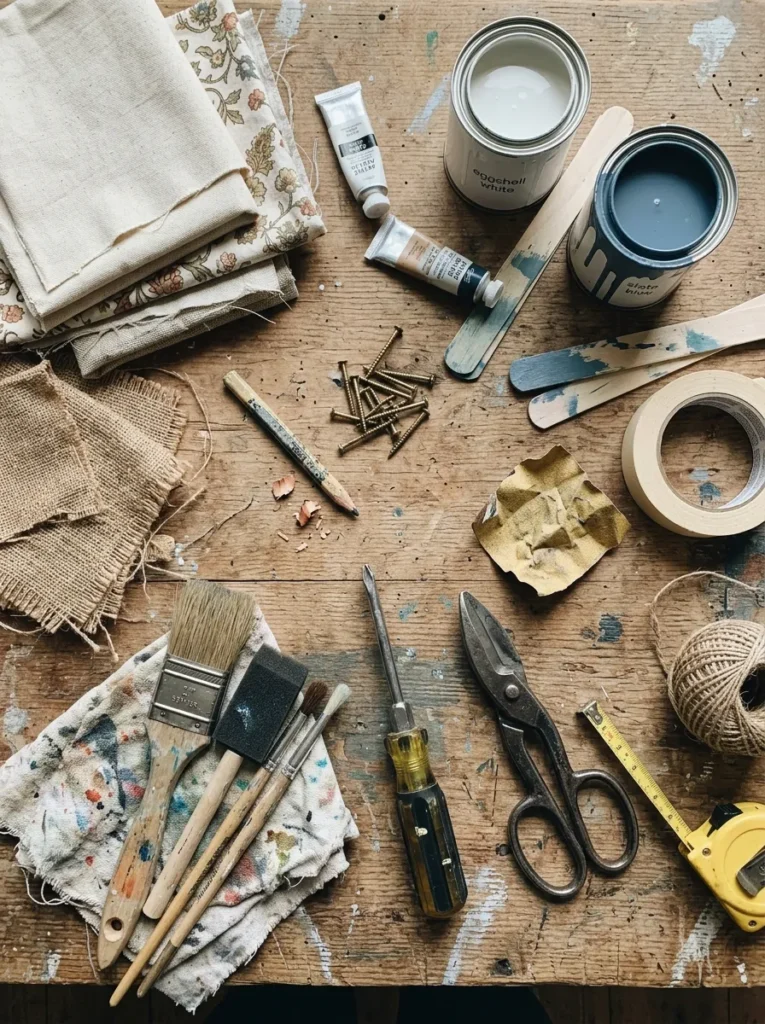
Most of these projects fit inside one weekend, and none need more than basic tools. Use this table to match a project to the time and money you have.
| Project | Time | Approx. Cost | Skill Level |
|---|---|---|---|
| Swap cabinet hardware | 1 to 3 hours | $20 to $80 | Easy |
| Stamped or embroidered tea towels | 1 to 2 hours | $10 to $25 | Easy |
| Framed recipe print | 1 hour | $10 to $30 | Easy |
| Windowsill herb planter | 1 hour | $15 to $35 | Easy |
| No-sew cafe curtains | 2 hours | $15 to $40 | Easy |
| Peel-and-stick tile strip | 2 to 4 hours | $25 to $60 | Easy to medium |
| Wooden counter risers | 2 to 3 hours | $15 to $40 | Easy to medium |
| Accent wall paint | 3 to 5 hours | $30 to $60 | Medium |
| Floating shelves | 3 to 5 hours | $30 to $80 | Medium |
| Painted island or lower cabinets | 1 weekend | $40 to $90 | Medium |
Costs are rough estimates. Prices vary by region, store, and the materials you already own.
If you only have two hours, start at the top of the list. If you have the whole weekend, pick one medium project and one easy one to finish it off.
Mistakes That Make DIY Kitchen Decor Look Messy
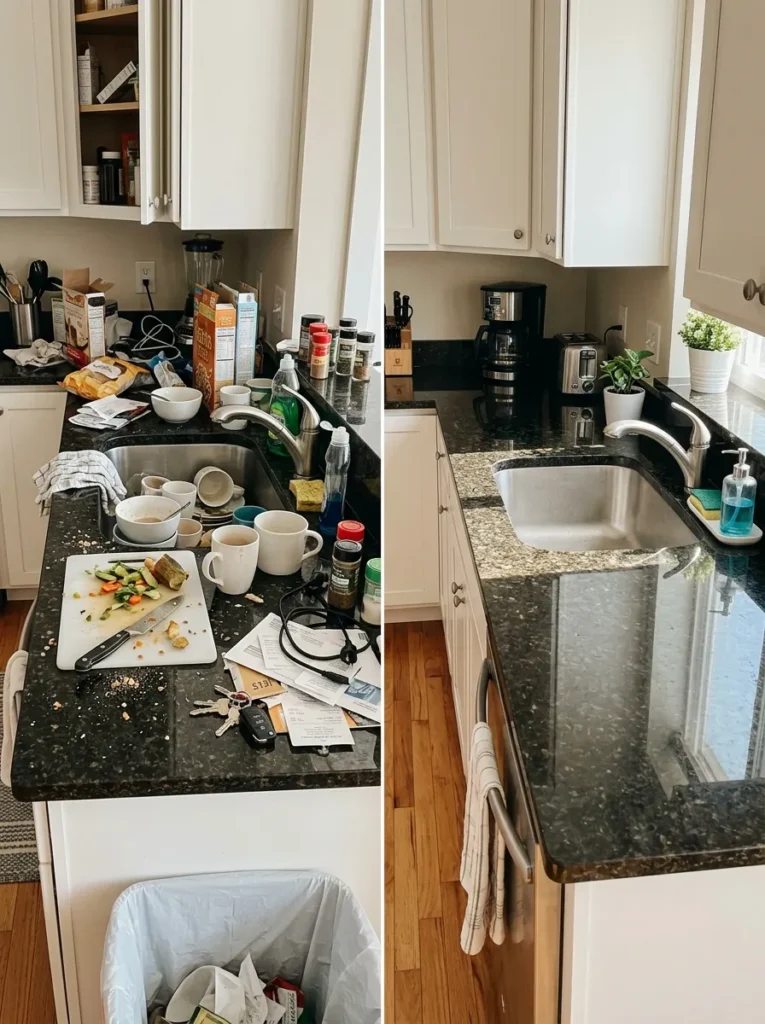
Handmade decor can look polished or chaotic, and the difference usually comes down to a few easy-to-fix habits. If something feels off, you rarely need to redo the project. Usually, editing what surrounds it is enough.
- If the kitchen feels busy: pick one theme and one or two colors, then remove anything that does not belong to them.
- If the counters look crowded: keep only items you use daily, and move decor to shelves, walls, or a single tray.
- If your paint keeps chipping: the surface was probably greasy or too glossy. Degrease, sand lightly, prime, and repaint with a durable satin or semi-gloss finish.
- If decor near the stove looks dingy: move fabric, paper art, and unsealed wood away from heat and steam, or choose wipeable materials there.
- If the shelf feels heavy: remove a few items and vary the heights, so pieces have space between them.
- If a handmade piece looks too small or too large: measure the spot first and keep the scale close to the space it sits in.
This is where DIY confidence helps. You are not trying to make everything perfect. You are deciding what earns a place in a room you cook in every day.
Use One Repeatable Formula for a Weekend Kitchen Refresh
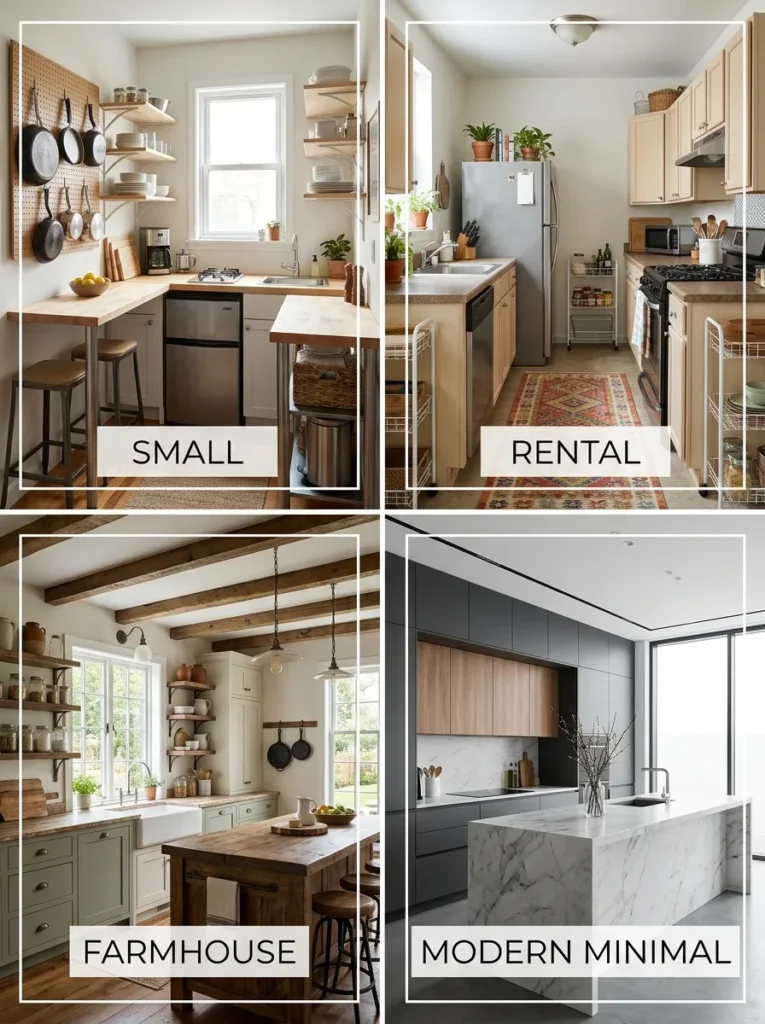
You do not need a new plan every time you want to update the kitchen. A simple formula removes most of the guesswork.
Formula: one focal project + one texture + one natural element + one styling edit.
For example, build floating shelves (focal project), add a linen tea towel (texture), set a small herb pot on the shelf (natural element), then clear everything else off the nearest counter (styling edit).
Here are a few plans for different kitchens.
| Kitchen Type | Weekend Plan | Why It Works |
|---|---|---|
| Small kitchen | Swap hardware + one wall rail + herb pot | Adds character without using counter space |
| Rental kitchen | Peel-and-stick tile strip + cafe curtains + framed recipe | Everything removes cleanly when you move |
| Farmhouse style | Stained floating shelves + linen towels + wooden risers | Warm wood and natural fabric feel collected |
| Modern minimal | Painted island + matte black pulls + one plant | One bold color keeps a clean room from feeling flat |
Once you find the plan that feels most like your kitchen, repeat it. Swap the focal project each season and keep the supporting touches familiar.
That is often the difference between decorating a kitchen and having a kitchen that feels finished.
Frequently Asked Questions
What is the best first DIY kitchen decor project?
Swapping cabinet hardware is the easiest start. It takes a few hours, needs only a screwdriver, and changes the look of the whole room.
A framed recipe or a windowsill herb planter is a good low-commitment alternative.
Can renters do DIY kitchen decor?
Yes. Peel-and-stick tile, tension-rod curtains, leaning shelves, plants, and textiles all come off cleanly. Save original hardware in a labeled bag if you swap it, so you can restore it later.
How much does a weekend kitchen refresh cost?
Most single projects land between $15 and $90, and a full weekend plan with one focal project and a few supporting pieces usually falls around $50 to $150, depending on what you already own.
What paint should I use in a kitchen?
Choose a satin or semi-gloss finish designed for cabinets or trim in the area you are painting. These finishes wipe clean more easily than flat paint. Always degrease and lightly sand first.
How do I keep kitchen decor from getting greasy?
Keep fabric, paper, and unsealed wood away from the stove. Use washable materials near cooking areas, wipe shelves weekly, and launder towels and curtains regularly.